Table of Contents
Some links on JAK Digital Hub are affiliate links, meaning we may earn a small commission at no extra cost to you. Read full disclaimer.
Finding the best email automation system that scales affordably can feel overwhelming, especially once your email list starts growing and software costs suddenly spike. What worked for your first 1,000 subscribers often becomes painfully expensive at 10,000 or 50,000.
I’ve seen this happen to many bloggers, ecommerce founders, and affiliate marketers. They start with a simple email tool, build momentum, and then hit a pricing wall where automation costs grow faster than their revenue.
The good news is that modern email marketing platforms have evolved. Many tools now offer powerful automation features, flexible pricing models, and performance analytics that scale without destroying your margins.
In this guide, I’ll walk you through exactly how to choose the best email automation system that scales affordably. We’ll cover how these systems work, how to set them up properly, which platforms actually grow with your business, and how to optimize automation so your email marketing becomes a reliable revenue engine instead of a cost center.
Understanding What an Email Automation System That Scales Affordably Actually Means
Before comparing platforms, it helps to understand what scalable email automation really means. Most beginners focus only on automation features.
But in reality, scalability depends on pricing structure, automation architecture, and deliverability.
What Email Automation Is and Why It Matters
Email automation is the process of sending emails automatically based on subscriber behavior, timing, or predefined rules.
Instead of manually sending newsletters every week, an automation system runs campaigns in the background.
Examples include:
- Welcome sequences for new subscribers
- Abandoned cart recovery emails
- Post-purchase follow-ups
- Lead nurturing sequences
- Re-engagement campaigns
Let me give you a simple scenario.
Imagine someone downloads a free guide from your website.
Instead of sending one email manually, automation can trigger a full sequence:
- Email 1: Welcome email with the guide
- Email 2: Helpful tips related to the guide
- Email 3: A case study
- Email 4: A product recommendation
All of this happens automatically.
According to research from Campaign Monitor, automated emails generate 320% more revenue than non-automated emails. That’s why businesses rely heavily on automation once their email list grows.
But the real challenge is doing this without paying thousands per month.
The Difference Between Cheap Tools and Scalable Systems
Many beginners confuse cheap email tools with affordable scalable systems.
Cheap tools often look appealing at first but become expensive or limited as your list grows.
Here’s where the difference shows up.
| Feature | Cheap Email Tool | Scalable Email Automation System |
|---|---|---|
| Pricing model | Costs rise sharply with subscribers | Flexible pricing tiers |
| Automation depth | Basic autoresponders | Advanced workflows |
| Segmentation | Limited | Behavioral segmentation |
| Analytics | Minimal | Detailed tracking |
| Deliverability | Often inconsistent | High inbox placement |
In my experience, the best email automation system that scales affordably must meet three criteria:
- Predictable pricing as your list grows
- Advanced automation workflows
- Strong deliverability and analytics
Without these, you’ll eventually outgrow the platform.
Core Features Every Scalable Email Automation System Should Have
If you want email automation to grow with your business, certain features are non-negotiable. Without them, scaling becomes messy and expensive.
Visual Automation Workflows
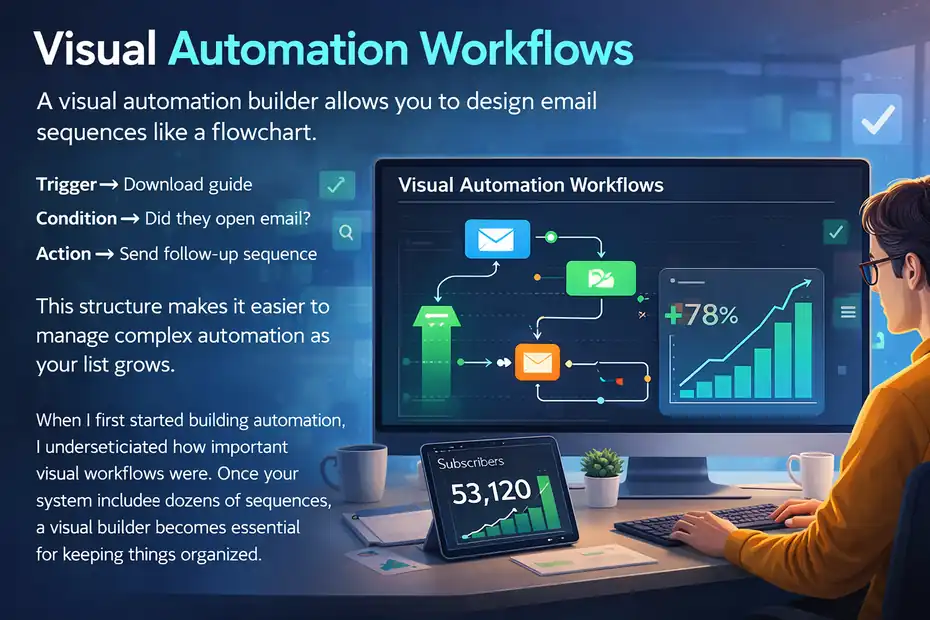
A visual automation builder allows you to design email sequences like a flowchart.
Instead of writing separate autoresponders, you build a workflow that maps the subscriber journey.
For example:
- Trigger → Download guide
- Condition → Did they open email?
- Action → Send follow-up sequence
This structure makes it easier to manage complex automation as your list grows.
When I first started building automation, I underestimated how important visual workflows were. Once your system includes dozens of sequences, a visual builder becomes essential for keeping things organized.
It also makes testing and optimization easier because you can see exactly where subscribers move within the funnel.
Advanced Segmentation and Behavioral Triggers
Segmentation allows you to send the right email to the right subscriber.
Without segmentation, everyone receives the same messages—which usually lowers engagement and conversions.
Behavioral triggers allow automation based on actions such as:
- Link clicks
- Page visits
- Purchase history
- Email engagement
- Tag changes
For example:
If a subscriber clicks a link about SEO tools, you can trigger a sequence focused on SEO tutorials.
This type of targeted messaging dramatically increases conversions.
According to Mailchimp data, segmented campaigns see up to 760% higher revenue than non-segmented campaigns.
Built-In Analytics and Conversion Tracking
A scalable email automation system must track performance clearly.
You should always know:
- Open rates
- Click-through rates
- Conversion rates
- Revenue generated per campaign
- Subscriber growth trends
Without this data, optimization becomes guesswork.
For example, if Email 3 in your automation sequence has a low open rate, you can test a new subject line.
If clicks drop after Email 4, the offer might need adjustment.
These insights allow your automation system to improve over time.
Best Email Automation Systems That Scale Affordably
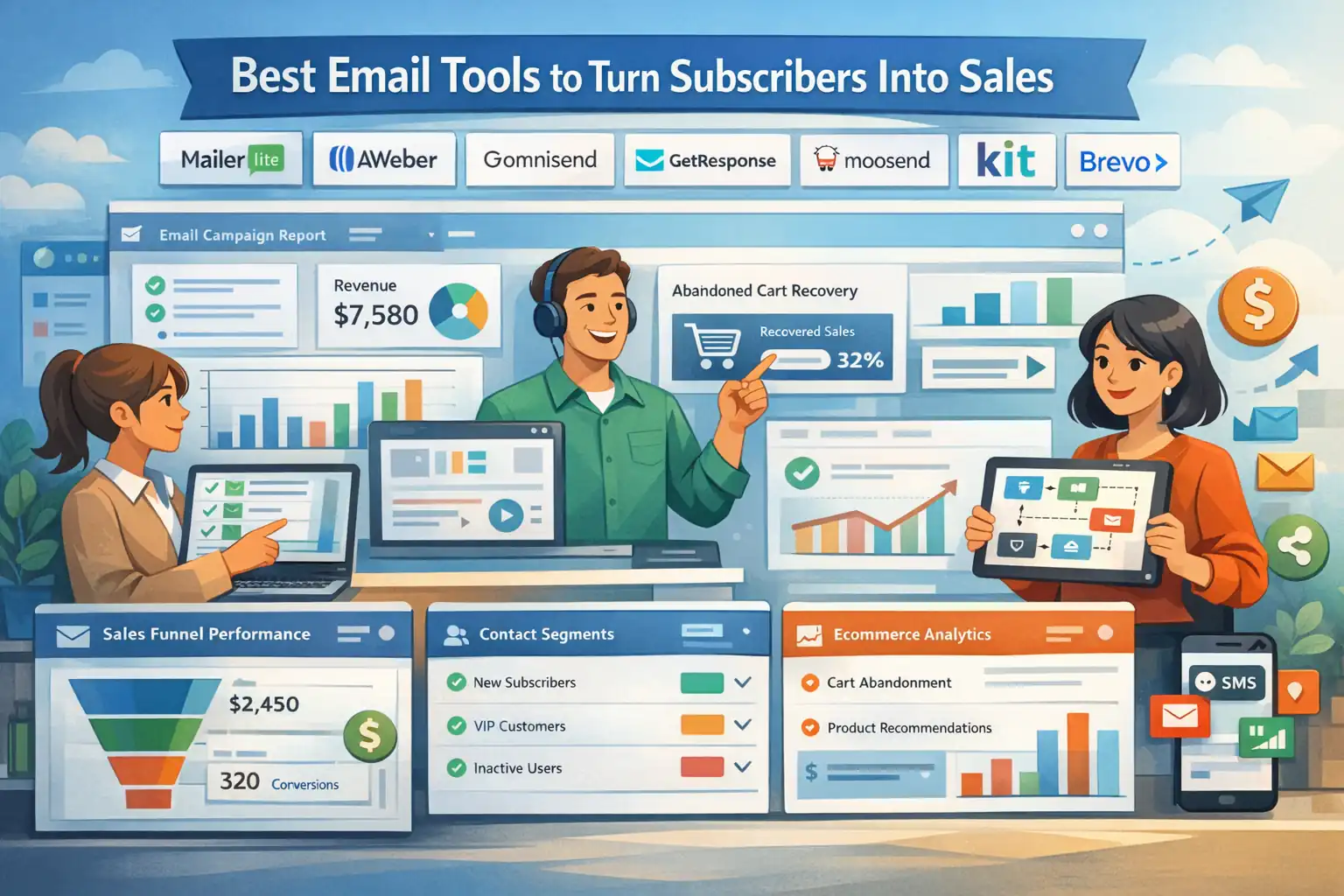
Now let’s look at platforms that balance automation power with pricing flexibility. These tools are commonly used by bloggers, creators, and ecommerce businesses that need scalable systems.
Kit (Formerly ConvertKit)
Kit (ConvertKit) is one of the most popular platforms for creators, bloggers, and affiliate marketers.
Its automation system focuses heavily on simplicity and tagging.
Key features:
- Visual automation builder
- Tag-based segmentation
- Creator-friendly landing pages
- Digital product selling tools
- Subscriber tagging workflows
What I like about Kit is how easy it is to build automation without technical knowledge. The interface is clean, and workflows are easy to maintain.
Pricing scales gradually, which helps prevent sudden cost spikes when your list grows.
It’s especially good for:
- Bloggers
- Course creators
- Affiliate marketers
- Newsletter businesses
Brevo
Brevo has a unique pricing model based on email volume instead of subscriber count.
This can make it extremely affordable for businesses with large lists but moderate sending frequency.
Key strengths include:
- Advanced automation workflows
- CRM integration
- Transactional email capabilities
- SMS automation
- Flexible pricing model
Because pricing depends on emails sent rather than contacts stored, Brevo can scale very efficiently for large lists.
It’s often used by:
- Ecommerce stores
- SaaS startups
- Businesses with large contact databases
MailerLite
MailerLite is known for offering strong automation features at very competitive pricing.
It includes:
- Automation workflows
- Landing page builder
- Email campaign builder
- Subscriber segmentation
- Reporting dashboard
Many beginners start with MailerLite because its free tier is generous and its paid plans remain affordable as the list grows.
From what I’ve seen, it works best for:
- Small businesses
- Bloggers
- digital product creators
- growing startups
ActiveCampaign
ActiveCampaign is one of the most advanced automation platforms available.
Its automation system is extremely powerful and designed for serious marketing automation.
Core capabilities:
- Advanced automation workflows
- Predictive sending
- CRM integration
- Lead scoring
- deep analytics
The platform is more complex than beginner tools, but the automation possibilities are almost unlimited.
Businesses often move to ActiveCampaign once their email marketing becomes a major revenue channel.
How to Set Up an Email Automation System That Scales Affordably
Choosing the platform is only the first step. The real impact comes from how you structure the automation system itself.
Step 1: Build Your Core Automation Sequences
Every scalable automation system starts with a few essential sequences.
These usually include:
- Welcome sequence
- Lead nurturing sequence
- Sales sequence
- Re-engagement sequence
- Post-purchase sequence
Start simple.
For example:
- Step 1: Welcome email introducing your brand
- Step 2: Value email sharing useful content
- Step 3: Story email building trust
- Step 4: Soft product recommendation
This structure builds engagement before selling.
In my experience, the welcome sequence alone often generates 30–40% of total email revenue.
Step 2: Use Tagging and Segmentation Early
One mistake I see frequently is delaying segmentation until the list becomes large.
That creates a messy system later.
Instead, tag subscribers from the beginning based on:
- signup source
- interests
- content downloads
- purchases
For example: Someone who downloads an SEO checklist should receive SEO-related content. Someone who downloads an ecommerce guide should receive ecommerce tips.
This small change dramatically improves automation performance.
Step 3: Track Performance From Day One
Optimization is impossible without data.
From the start, monitor:
- open rates
- click-through rates
- unsubscribe rates
- revenue per subscriber
A healthy email automation system typically sees:
- Open rates: 25–45%
- Click rates: 3–10%
If numbers fall below that, the issue usually comes from:
- weak subject lines
- poor targeting
- low-value content
Tracking early helps you fix problems before they affect your entire system.
Common Mistakes That Make Email Automation Expensive

Even with the best platform, automation costs can spiral if the system is poorly designed.
Overbuilding Complex Automation Too Early
Many marketers build extremely complex automation systems from the start.
But complexity doesn’t always equal better performance.
A simple 5-email sequence often outperforms a 25-email maze.
Start simple.
Then expand automation based on real subscriber behavior.
Ignoring List Hygiene
Inactive subscribers increase costs without generating revenue.
Many email platforms charge based on total contacts.
If 40% of your list never opens emails, you’re paying for subscribers who produce no return.
Regularly remove or re-engage inactive contacts.
This keeps your automation system efficient and affordable.
Choosing Platforms That Penalize Growth
Some platforms increase pricing aggressively as subscriber counts grow.
This can turn a $29 monthly tool into a $500 monthly bill once the list scales.
Before committing to a platform, review long-term pricing tiers.
Look at costs for:
- 10,000 subscribers
- 50,000 subscribers
- 100,000 subscribers
Scalability depends heavily on these thresholds.
Advanced Strategies to Scale Email Automation Profitably
Once your system is running smoothly, you can apply advanced strategies to maximize revenue.
Behavior-Based Automation Funnels
Instead of sending fixed sequences, behavior-based funnels adapt to subscriber actions.
Example:
- If someone clicks a product link → send product case study
- If someone ignores sales emails → send educational content
This makes automation feel personalized rather than robotic.
Revenue-Focused Segmentation
High-value subscribers often behave differently than casual readers.
Segment based on:
- repeat buyers
- high click engagement
- premium product purchases
These subscribers are more likely to convert, so targeted campaigns generate higher ROI.
Automation Testing and Optimization
Automation systems should evolve continuously.
Test variables such as:
- subject lines
- send times
- content structure
- call-to-action placement
Small improvements compound quickly.
For example, increasing click rate from 3% to 5% can boost automation revenue by more than 60%.
Final Thoughts
Building the best email automation system that scales affordably isn’t just about picking a platform.
It’s about designing a system that grows with your audience without increasing costs faster than revenue.
Start with a simple automation structure, focus on segmentation early, and choose platforms that support long-term scalability.
From what I’ve seen, email automation remains one of the most profitable marketing channels available. With the right system in place, a well-built automation funnel can generate consistent revenue for years with minimal maintenance.
And once your automation starts working, you’ll realize something powerful: your email list becomes one of the most valuable assets your business owns.
FAQ
What is an email automation system that scales affordably?
An email automation system that scales affordably is a platform that automatically sends targeted emails while keeping pricing manageable as your subscriber list grows. It allows businesses to automate campaigns, segment audiences, and track performance without costs increasing faster than revenue.
Why is scalability important in an email automation system?
Scalability ensures your email platform can handle subscriber growth without dramatic price increases or performance issues. As your list expands, a scalable system keeps automation running smoothly while maintaining predictable pricing and strong email deliverability.
What features should an affordable scalable email automation system include?
A scalable email automation system should include workflow automation, behavioral triggers, audience segmentation, performance analytics, and flexible pricing. These features allow businesses to automate campaigns efficiently while keeping email marketing costs sustainable as the audience grows.
Which businesses benefit most from email automation systems?
Bloggers, ecommerce stores, SaaS startups, creators, and affiliate marketers benefit the most from email automation systems. These businesses rely on automated sequences to nurture leads, recover abandoned carts, and convert subscribers into paying customers consistently.
How does email automation help grow revenue?
Email automation increases revenue by sending personalized messages triggered by subscriber behavior. Automated welcome sequences, sales funnels, and follow-up campaigns build trust and guide subscribers toward purchases, generating consistent conversions without manual effort.

Juxhin B is a digital marketing researcher and founder of JAK Digital Hub, specializing in email marketing software, marketing automation platforms, and digital growth tools. His work focuses on software testing, platform comparisons, and real-world performance analysis to help businesses choose the right marketing technology.
Related posts:
 Cheaper Email Automation System For Growing List Fast
 Email Automation Systems That Drive Revenue
 Email Automation Tools for New Ecommerce Store: What to Start With
 Is There Better Email Automation Software For Ecommerce?
 Best Email Tools to Turn Subscribers Into Sales
 Email Automation Tools Not Triggering? Fix the Issue Fast