Table of Contents
Some links on JAK Digital Hub are affiliate links, meaning we may earn a small commission at no extra cost to you. Read full disclaimer.
If you’re exploring email marketing jobs for career changers, you’re probably looking for something practical: a career that doesn’t require a new degree, offers remote opportunities, and actually pays well once you gain experience. The good news is that email marketing checks all those boxes.
In my experience, email marketing is one of the most underrated career pivots in digital marketing. Many businesses rely heavily on email for revenue — sometimes 30–40% of total online sales — yet there aren’t nearly enough skilled people managing these systems. That gap creates opportunity, especially for people switching careers.
The best part? You don’t need a technical background to get started. If you can write clearly, understand basic customer psychology, and learn how marketing automation works, you can build real career momentum.
In this guide, I’ll walk you through how email marketing jobs work, what skills matter most, how to transition into the field, and how career changers can realistically land their first role.
Why Email Marketing Is One of the Best Careers to Switch Into
Email marketing sits at the intersection of psychology, writing, analytics, and automation. That combination makes it surprisingly accessible for people coming from different professional backgrounds.
Why Businesses Depend Heavily on Email Marketing
Email is still one of the highest-ROI marketing channels available. According to the Data & Marketing Association, email marketing generates an average return of $36–$42 for every $1 spent.
Why companies invest heavily in it:
- Email audiences are owned assets (unlike social media followers).
- Automated email flows generate revenue around the clock.
- Customer retention is cheaper than acquiring new buyers.
Imagine you run a small ecommerce store. One well-built abandoned cart sequence could recover 10–15% of lost purchases automatically. That’s why companies hire email marketers — these systems directly impact revenue.
From what I’ve seen, once a business realizes how powerful email automation is, they quickly move from “occasional newsletters” to building full email funnels. That shift creates demand for skilled professionals.
Why Career Changers Thrive in Email Marketing
One reason email marketing jobs for career changers are realistic is that the field rewards transferable skills, not just technical credentials.
Many successful email marketers started in roles like:
- Customer support
- Teaching
- Journalism
- Sales
- Administration
- Content writing
These backgrounds often translate surprisingly well.
For example:
- Teachers understand communication and engagement.
- Sales professionals understand persuasion.
- Writers understand messaging and storytelling.
Email marketing combines all of those abilities.
I’ve personally seen people transition into email marketing within 6–9 months of focused learning and portfolio building.
Remote Work and Freelance Opportunities
Another big advantage is flexibility.
Email marketing work is mostly digital and asynchronous, meaning:
- Remote jobs are common
- Freelance opportunities are abundant
- Agencies hire contract specialists regularly
Many email marketers work in one of three models:
- Full-time remote role
- Freelancing for multiple clients
- Running a small email marketing consultancy
This flexibility makes the field especially attractive for people leaving traditional careers.
What Email Marketing Jobs Actually Involve
Before switching careers, it’s important to understand what the day-to-day work actually looks like.
Email marketing isn’t just writing newsletters. It’s about designing systems that move customers through a buying journey.
Writing and Structuring Marketing Emails
One of the core responsibilities is email copywriting.
That includes writing messages like:
- Welcome emails
- Promotional campaigns
- Product announcements
- Re-engagement emails
- Cart recovery emails
But the goal isn’t just sending emails — it’s guiding readers toward a specific action.
A typical promotional email structure looks like this:
- Subject line designed to increase open rate
- Hook that captures interest
- Clear value proposition
- Call-to-action encouraging a click
For example:
Imagine an ecommerce store selling fitness gear.
Instead of writing: “Check out our new products.”
A better email would say: “Your workout routine is about to get easier — here’s the gear our customers are loving this month.”
Small messaging changes like that can dramatically improve conversions.
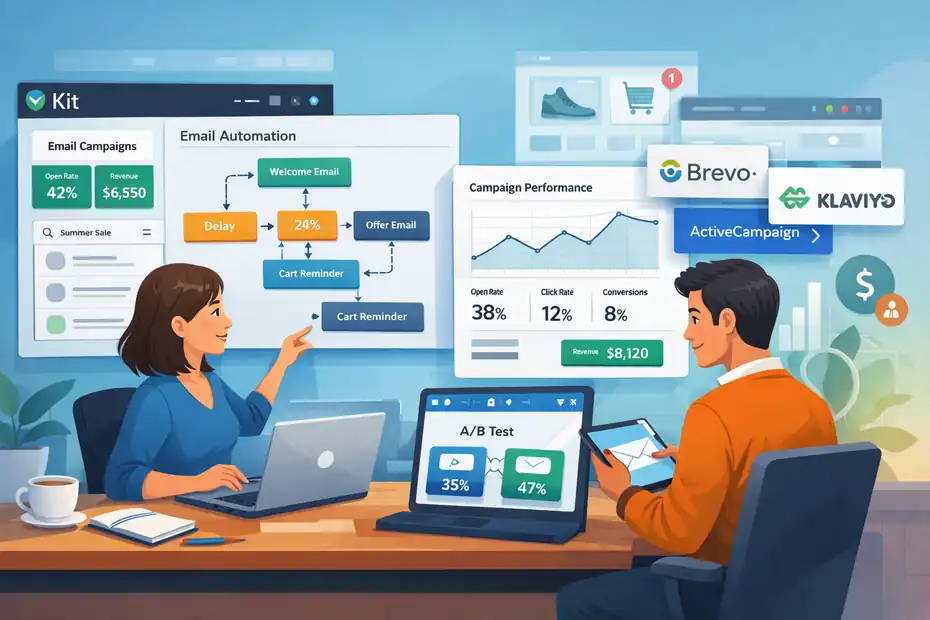
Building Automated Email Sequences
Automation is where email marketing becomes powerful.
Automated flows trigger emails based on behavior, such as:
- Joining a mailing list
- Abandoning a shopping cart
- Making a purchase
- Clicking a link
These sequences often include:
- Welcome sequences (5–7 emails introducing a brand)
- Abandoned cart recovery emails
- Customer onboarding emails
- Post-purchase follow-ups
A well-designed welcome sequence can convert 5–15% of new subscribers into customers, which is why businesses invest heavily in these flows.
Designing these sequences requires understanding the customer journey — not just writing emails.
Analyzing Campaign Performance
Email marketers also monitor performance data.
Common metrics include:
| Metric | What It Measures |
|---|---|
| Open Rate | How many recipients opened the email |
| Click-Through Rate | How many clicked a link |
| Conversion Rate | How many completed the intended action |
| Revenue Per Subscriber | Overall profitability of the list |
Analyzing these numbers helps marketers optimize campaigns over time.
For example, if an email has a strong open rate but poor clicks, the issue may be the message or call-to-action.
Essential Skills Needed to Start an Email Marketing Career
You don’t need a traditional marketing degree to enter this field, but there are several skills that make a big difference.
Email Copywriting and Persuasive Communication
At the heart of email marketing is communication.
Effective email copy focuses on:
- Clear messaging
- Emotional connection
- Persuasive calls-to-action
One thing I always suggest: study how strong marketing emails feel conversational.
Good email copy reads like a helpful message from a real person — not corporate advertising.
Even basic improvements in writing can increase conversions significantly.
Customer Psychology and Audience Segmentation
Successful email marketers think about who they’re sending emails to.
Segmentation means dividing subscribers into groups based on behavior or interests.
Examples:
- New subscribers
- Repeat buyers
- Inactive users
- High-value customers
Sending targeted emails to each group improves performance dramatically.
For instance, a discount offer might work well for inactive users but could annoy loyal buyers who already purchase regularly.
Understanding customer psychology helps you make smarter decisions about messaging.
Marketing Automation Fundamentals
Automation is the technical backbone of email marketing.
You don’t need to code, but you should understand concepts like:
- Triggered email workflows
- Subscriber tagging
- Conditional logic
- Behavioral triggers
These systems allow marketers to deliver personalized experiences at scale.
Once you understand automation logic, building campaigns becomes much easier.
Step-by-Step: How Career Changers Can Enter Email Marketing
Switching careers can feel overwhelming, but email marketing is one field where a structured approach works very well.
Step 1: Learn the Foundations of Email Marketing
Start by understanding how email marketing systems work.
Focus on learning:
- Customer lifecycle marketing
- Email funnel structure
- Basic copywriting techniques
- Email analytics
You don’t need years of study. A few weeks of focused learning can give you a solid foundation.
I often suggest studying real email campaigns from brands you already follow. Look at:
- Welcome sequences
- Promotional campaigns
- Re-engagement emails
Pay attention to tone, timing, and structure.
Step 2: Build a Small Email Marketing Portfolio
One of the biggest obstacles career changers face is the classic problem:
“How do I get experience if nobody hires beginners?”
The answer is creating your own portfolio.
Here are simple ways to do that:
- Write a mock welcome sequence for a fictional brand
- Design a promotional campaign for an ecommerce store
- Create a sample abandoned cart email series
These projects demonstrate your understanding of email strategy.
Many hiring managers care more about clear thinking and practical examples than formal credentials.
Step 3: Practice Campaign Strategy and Email Flows
Once you understand basic campaigns, start designing complete email systems.
Example practice project: Imagine you’re building an email funnel for a skincare brand.
Your system might include:
- Welcome sequence
- Product education emails
- Promotional campaign
- Cart recovery emails
- Customer retention emails
Mapping the entire funnel helps demonstrate strategic thinking — something employers value highly.
Tools That Email Marketers Commonly Use
Once you begin working in email marketing jobs for career changers, you’ll interact with platforms that manage campaigns, automation, and analytics.
These tools allow marketers to build email flows visually without coding.
Popular Email Marketing Platforms
Several platforms dominate the email marketing ecosystem.
| Platform | Best For | Key Strength |
|---|---|---|
| Kit | Creators and bloggers | Simple automation |
| Brevo | Small businesses | Affordable automation |
| Mailchimp | Beginners | Easy campaign setup |
| ActiveCampaign | Advanced automation | Powerful segmentation |
| Klaviyo | Ecommerce brands | Deep customer data |
Most platforms offer drag-and-drop builders for emails and visual workflow tools for automation.
In my experience, once you learn one platform, switching to another becomes much easier because the core concepts stay the same.
Analytics and Testing Tools
Email marketing relies heavily on testing and performance tracking.
Marketers frequently run A/B tests to compare different versions of emails.
Examples of things tested:
- Subject lines
- Send times
- Call-to-action buttons
- Email length
Even small tests can produce surprising results. A single subject line change might increase open rates by 10–20%.
Data-driven decision making is one of the key reasons email marketing remains so profitable.
Common Mistakes Career Changers Should Avoid
Many beginners focus on the wrong things when entering email marketing.
Over-Focusing on Tools Instead of Strategy
Tools are helpful, but they are not the core skill.
Many new marketers spend weeks learning platforms but neglect:
- messaging
- audience psychology
- campaign strategy
The truth is that tools change constantly. Strategic thinking stays valuable.
If you understand how customer journeys work, you can adapt to any platform.
Treating Email Campaigns Like Newsletters
Another common mistake is sending generic newsletters without a clear purpose.
Every email should answer one question:
What action should the reader take?
Good campaigns guide subscribers through a journey.
For example:
- Email 1: Introduce a product
- Email 2: Share customer success stories
- Email 3: Offer a limited promotion
That progression increases the chance of conversion.
Ignoring Email List Quality
Many beginners obsess over growing a huge email list.
But a smaller engaged list is far more valuable.
For example:
- 10,000 disengaged subscribers generate little revenue
- 2,000 engaged subscribers can produce significant sales
Cleaning inactive subscribers often improves overall performance.
Advanced Strategies to Grow Your Email Marketing Career
Once you land your first role or freelance project, your next goal is building deeper expertise.
Specializing in High-Value Email Marketing Niches
Some industries rely heavily on email marketing.
These include:
- Ecommerce brands
- Online education platforms
- SaaS companies
- Membership communities
Specializing in one industry allows you to develop deeper expertise.
For example, ecommerce email marketers often focus heavily on automation flows like abandoned carts, product recommendations, and post-purchase sequences.
Because these systems directly impact revenue, specialists in these niches often command higher rates.
Building a Personal Brand in Email Marketing
Another career growth strategy is building visibility.
Some email marketers share insights through:
- LinkedIn posts
- newsletters
- marketing case studies
This can attract freelance clients, consulting work, or job offers.
When employers see that you understand email marketing deeply enough to teach it, your credibility increases dramatically.
Transitioning into Marketing Strategy Roles
With experience, many email marketers move into broader marketing leadership positions.
Examples include:
- Lifecycle marketing manager
- CRM marketing strategist
- Growth marketing manager
These roles oversee entire customer journeys rather than just email campaigns.
In many companies, email marketing becomes the foundation for broader lifecycle marketing systems.
Final Thoughts on Email Marketing Jobs for Career Changers
Starting a new career can feel intimidating, but email marketing jobs for career changers are one of the most realistic ways to enter the digital marketing world.
You don’t need a computer science degree. You don’t need years of experience.
What you do need is:
- strong communication skills
- curiosity about customer behavior
- willingness to learn marketing systems
From what I’ve seen, people who approach email marketing with patience and curiosity often progress quickly.
And because email remains one of the most profitable marketing channels for businesses, the demand for skilled professionals continues to grow.
If you’re considering a career shift, email marketing might be the path that opens the door.
FAQ
What are email marketing jobs for career changers?
Email marketing jobs for career changers involve managing email campaigns, writing marketing emails, building automation sequences, and analyzing performance data. These roles help businesses communicate with customers and generate sales through targeted email campaigns.
Do you need experience to start email marketing jobs as a career changer?
You don’t always need formal experience to start email marketing jobs as a career changer. Many beginners build a small portfolio with practice campaigns and email sequences to demonstrate their skills to employers or freelance clients.
What skills are required for email marketing jobs?
Email marketing jobs require strong writing skills, basic marketing knowledge, customer psychology awareness, and an understanding of email automation. Learning how to analyze campaign metrics like open rates and click rates is also important.
Are email marketing jobs good for remote work?
Email marketing jobs are well suited for remote work because most tasks involve writing emails, managing automation systems, and analyzing campaign data online. Many companies hire remote email marketers or freelancers to manage campaigns.
How long does it take to transition into email marketing?
Many career changers can transition into email marketing within three to nine months with focused learning and portfolio building. The timeline depends on how quickly you develop skills in email copywriting, marketing strategy, and automation.

Juxhin B is a digital marketing researcher and founder of JAK Digital Hub, specializing in email marketing software, marketing automation platforms, and digital growth tools. His work focuses on software testing, platform comparisons, and real-world performance analysis to help businesses choose the right marketing technology.
Related posts:
 Best Email Marketing Jobs For Marketing Assistants
 Email Marketing Jobs For Content Marketers Hiring Now
 Email Marketing Jobs Without Degree: 10 Real Opportunities
 Email Marketing Jobs For Startups Hiring Remote Talent
 Email Marketing Jobs For Side Hustle That Pay Monthly
 Email Marketing Jobs Remote Part Time That Pay Well