Table of Contents
Some links on JAK Digital Hub are affiliate links, meaning we may earn a small commission at no extra cost to you. Read full disclaimer.
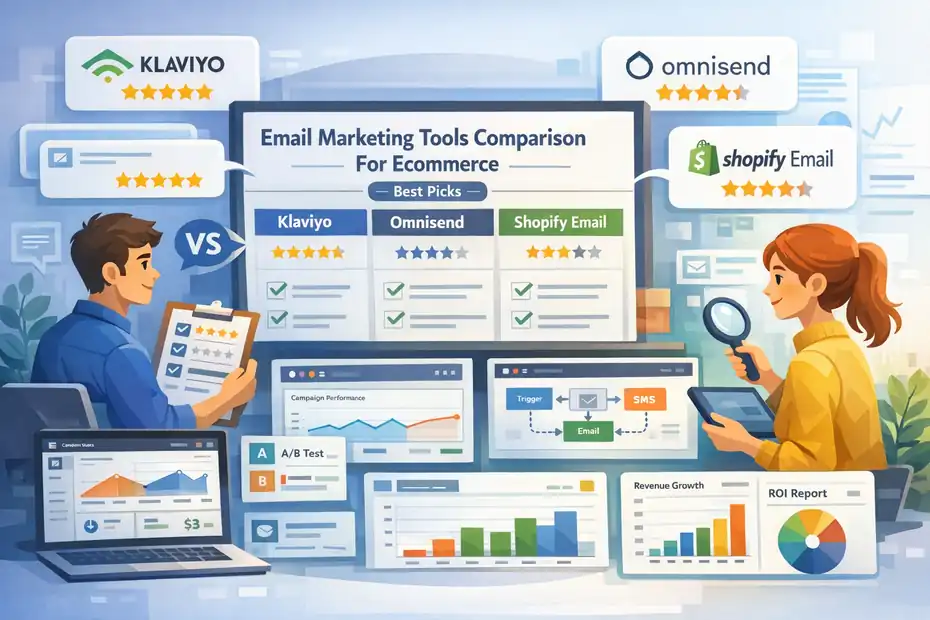
Email marketing tools comparison for ecommerce can get confusing fast, especially when every platform says it is the “best” for sales, automation, and retention.
I think the smarter way to choose is simpler: match the tool to your store stage, your catalog complexity, and how much personalization you will actually use in the next 6 to 12 months.
In this guide, I’ll walk you through the real differences between the top options, where they shine, where they get expensive, and which one makes sense for a small store, a scaling brand, or a team that needs advanced lifecycle marketing.
What Matters Most In An Ecommerce Email Platform
Choosing the right platform is less about flashy templates and more about how well the tool supports revenue-generating customer journeys.
For ecommerce, the real test is whether the software can turn browsing, cart activity, purchases, and repeat behavior into timely, useful messages.
What “Good” Actually Looks Like
Revenue Signals Over Vanity Metrics. A strong ecommerce email platform should connect email performance to orders, average order value, repeat purchase rate, and revenue per recipient. Open rate still matters, but it is not the number I would build my decision around.
Klaviyo’s benchmark pages lean heavily into revenue and order-rate reporting, which tells you where the category is going.
Behavior-Based Automation. You want flows triggered by actions like product viewed, cart abandoned, checkout started, order placed, and customer win-back timing. This is where ecommerce tools separate themselves from general newsletter software.
Drip, Omnisend, Klaviyo, and ActiveCampaign all position automation as a core strength, while Shopify Email is more lightweight and practical for simple campaigns.
Native Store Data. In my experience, the fastest way to regret your email platform is picking one that does not sync cleanly with your store. You need products, customer tags, order history, and browsing events flowing in without duct-tape workarounds.
Omnisend, Drip, ActiveCampaign, and Klaviyo all emphasize ecommerce integrations, while Shopify Email has the obvious native advantage for Shopify stores.
The Features That Usually Move Revenue
Core Flows First. For many stores, 5 automations matter more than 50 templates: welcome series, browse abandonment, cart recovery, post-purchase, and win-back.
Segmentation Depth. Basic segmentation is “customers who bought once.” Better segmentation is “customers who bought winter outerwear in the last 90 days, spent over $150, and have not repurchased.”
Channel Expansion. Some brands eventually need SMS, transactional email, or even WhatsApp. Klaviyo and Omnisend push multi-channel hard; Brevo also combines email, SMS, CRM, and transactional messaging in one system.
Best Picks At A Glance
There is no single winner for every store. The best pick depends on whether you value speed, depth, low cost, or automation sophistication.
Best Overall: Klaviyo
If you run a serious ecommerce brand and want deep segmentation, strong reporting, and advanced lifecycle automation, Klaviyo is still one of the safest choices.
It has a free plan, email and SMS support, built-in reporting, and it keeps expanding its B2C CRM positioning with more channels and data tools.
Brands using email plus SMS through Klaviyo are reported by the company to see a 19% increase in GMV growth rate, which is the kind of claim that explains why many DTC brands start there or migrate there later.
I recommend Klaviyo when you care about advanced flows, segmentation, and revenue attribution more than low monthly cost. It is especially strong for mid-market Shopify brands, brands with repeat-purchase products, and teams that want a platform they can grow into rather than outgrow.
Best Value For Small To Mid-Size Stores: Omnisend
Omnisend is the platform I would put near the top for a growing store that wants ecommerce-first features without Klaviyo-level pricing pressure right away.
Its free plan includes all features with a sending cap, paid plans start at $16 per month, and the platform leans heavily into ecommerce automations, forms, segmentation, and email plus SMS.
Omnisend also states that its customers make an average of $79 for every $1 spent, which is a vendor-reported marketing figure, but it does highlight how aggressively they position ROI.
For a lean team, this matters. You often do not need the most complex platform. You need one that gets abandoned cart, welcome, and post-purchase working quickly and cleanly.
Best For Advanced Automation Beyond Ecommerce: ActiveCampaign
ActiveCampaign is excellent when ecommerce is only one part of a broader customer lifecycle. It includes deep automation, over 1,000 integrations, and multiple plan tiers, including Starter, Plus, Pro, and Enterprise.
I usually like it for stores that also have lead nurturing, B2B elements, subscriptions, or more complex CRM-style workflows around retention and sales.
The tradeoff is that it can feel heavier than a pure ecommerce-first platform. If your team is small and your use case is mostly “sell products better,” Omnisend or Klaviyo may feel more direct.
Best For Simplicity Inside Shopify: Shopify Email
Shopify Email is not the most advanced option, but it is one of the easiest to start with if you already live inside Shopify.
You get 10,000 free emails per month, then pricing starts at $1 per 1,000 additional emails, with lower rates at higher volume tiers. That pay-as-you-use model is appealing for smaller stores that want straightforward campaigns without another full platform to manage.
I would not call it the best long-term choice for complex lifecycle marketing, but it is absolutely a practical starting point.
Best For Creator-Led Or DTC Lifecycle Journeys: Drip
Drip is built around customer-centric automation for brands that sell online. Pricing starts around $39 per month based on list size, and the platform focuses on segmentation, workflows, and ecommerce behavior triggers.
Drip also reports a 99.8% delivery rate, 61% workflow email open rate, and 68% repeat purchase rate across its customer base, which again is vendor-reported, but directionally useful when evaluating positioning.
I like Drip for brands that care about thoughtful lifecycle design and do not need the broader “all-in-one” features of a CRM-heavy platform.
Tool-By-Tool Breakdown
This is where the email marketing tools comparison for ecommerce gets practical. Let’s break down what each platform is really good at.
Klaviyo: Best For Revenue Attribution And Segmentation
Where It Shines. Klaviyo’s biggest strength is that it behaves like a commerce-focused customer data and messaging platform, not just a campaign sender. You can build segments around order history, predicted behavior, product interest, and engagement. That makes it easier to send fewer, better emails.
Why Stores Upgrade Into It. As stores scale, they usually need stronger reporting and better flow logic. Klaviyo’s pricing page and marketing pages emphasize built-in reporting, customer data, and multiple channels including text and WhatsApp. That matters when your retention strategy becomes more sophisticated.
Where It Can Hurt. Cost can rise fast with contact growth and expanded channel usage. If your list hygiene is messy and you keep inactive subscribers forever, Klaviyo can become expensive before you fully use its value.
Who Should Choose It. Mid-size and scaling ecommerce brands, especially brands with repeat purchases, multiple collections, or a real retention strategy.
Omnisend: Best For Fast Ecommerce Execution
Where It Shines. Omnisend is built to be approachable. You get email, SMS, forms, segmentation, automation, and ecommerce integrations without a big setup burden. The free plan includes all features, which is generous for testing real workflows before paying.
Why I Like It For Lean Teams. Many owners do not need a massive platform. They need automations that work, product recommendations that make sense, and reporting they can understand quickly. Omnisend is very good at that balance.
The Main Tradeoff. It may not give advanced operators the same depth of data modeling or prestige ecosystem that Klaviyo commands. For some brands, that will not matter at all.
Who Should Choose It. Newer ecommerce brands, small teams, and stores that want solid ROI without turning email into a full-time technical project.
ActiveCampaign: Best For Mixed-Model Businesses
Where It Shines. ActiveCampaign stands out when your store is not purely transactional. Maybe you sell products, wholesale packages, demos, subscriptions, or services. In those cases, deep automations and cross-channel workflows become more important than ecommerce templates alone.
What Makes It Different. It is often less “plug-and-play ecommerce” and more “build the customer journey you want.” That is powerful if you have the time and marketing maturity to use it well.
The Tradeoff. Complexity. Not every founder wants to manage a system that can do almost everything.
Who Should Choose It. Brands with more complex journeys, multiple funnels, or teams that already think in automation logic.
Shopify Email, Brevo, Mailchimp, And MailerLite: Practical Alternatives
Shopify Email. Best for low-friction execution inside Shopify. Great for newsletters, launches, and basic automations. Less ideal for advanced retention architecture.
Brevo. Useful if you want email, SMS, CRM, and transactional messaging together, especially with send-based pricing starting low. Brevo’s free plan includes 300 daily emails and 100,000 contact storage, which makes it attractive if your list is large but sending volume is controlled.
Mailchimp. Still a known brand with broad functionality, AI features, and multiple plan tiers, but in ecommerce-specific comparisons it often feels less purpose-built than Omnisend or Klaviyo.
MailerLite. Very budget-friendly and easy to start with, with a free plan up to 12,000 emails per month and paid plans starting around $9 to $10. I would consider it if your ecommerce email strategy is still basic.
Pricing And Value Without The Noise
Pricing is one of the biggest reasons people search for an email marketing tools comparison for ecommerce.
The trap is comparing only the starting price instead of the total cost at your actual subscriber count and sending behavior.
What Current Entry Pricing Looks Like
Here is the simple version based on current official pricing pages:
- Klaviyo: Free plan available; paid email and SMS pricing scales with usage and contacts.
- Omnisend: Free plan available; paid plans start at $16 per month.
- ActiveCampaign: Trial available; pricing depends on plan tier and contacts, with multiple plan levels.
- Drip: Starts around $39 per month based on list size and send volume.
- Brevo: Starter plan begins around $9 per month, with send-based pricing.
- Shopify Email: 10,000 emails free monthly, then $1 per 1,000 additional emails up to 300,000.
- MailerLite: Free plan available, paid plans start around $9 to $10 per month.
How To Think About “Cheap”
Cheap Up Front Can Become Expensive Later. A low starting plan is great, but not if you need to add another tool for popups, SMS, segmentation, or transactional email six weeks later.
Send-Based Vs Contact-Based Pricing. Shopify Email and Brevo can be attractive when you do not send heavily to your full list. Klaviyo and some others can become expensive if you carry lots of inactive contacts.
Migration Cost Counts Too. Switching later has a cost: rebuilding flows, warming domains, fixing templates, and rechecking event tracking. I usually advise choosing the cheapest platform only when your strategy is still very simple.
How To Choose Based On Your Store Stage
The smartest software decision is usually stage-based, not feature-maxed. Let me break it down by the kind of store you actually run.
New Store Or Side Hustle
If you are early, simplicity matters more than depth. You probably need:
- A welcome flow
- Basic campaign sending
- Cart recovery
- Simple segmentation
- Low monthly cost
My pick here would usually be Omnisend, Shopify Email, or MailerLite depending on your platform and budget. Shopify Email is especially appealing for Shopify stores with low complexity, while Omnisend gives you more room to grow without overwhelming you.
Imagine you run a small candle shop with 1,800 subscribers and launch two new scents every quarter. You do not need enterprise architecture. You need reliable campaigns, a clean welcome flow, and a cart recovery sequence that pays for itself.
Growing Brand With Repeat Purchase Potential
This is the sweet spot where better automation starts to compound. If you sell skincare, coffee, supplements, pet products, apparel basics, or anything people can reorder or buy seasonally, lifecycle marketing matters a lot more.
Here, I would lean toward Klaviyo, Omnisend, or Drip. You want stronger segmentation, better product-driven automations, and clearer revenue reporting.
Klaviyo usually wins when data sophistication matters most. Drip is excellent when you want strong automation logic without overcomplicating the interface.
Mature Brand With Team And Complexity
Once you have a marketing team, multiple acquisition sources, and a real retention calendar, your email system becomes infrastructure.
At that point, advanced segmentation, multi-channel orchestration, deliverability controls, and reporting accuracy matter more than saving $40 a month.
My shortlist here would be Klaviyo and ActiveCampaign, depending on whether you are more commerce-first or workflow-first.
The Setup Features You Should Prioritize First
A lot of store owners compare tools by template galleries. I think that is the wrong priority. Templates are nice. Revenue architecture matters more.
Start With These Core Automations
Welcome Series. This should introduce the brand, set expectations, and convert first-time subscribers. For discount-led brands, this often does the heaviest lifting early.
Cart Abandonment. Still one of the highest-intent flows in ecommerce. A good platform should make this easy to launch with timing controls and product pull-through.
Post-Purchase. This is where many stores leave money on the table. Good post-purchase email is not just “thanks for your order.” It is education, cross-sell, review requests, refill timing, and repeat purchase nudges.
Win-Back. Especially useful when your product has a predictable reorder window.
Platforms like Omnisend, Klaviyo, Drip, and ActiveCampaign all emphasize automation and ecommerce-triggered messaging as core value points.
Then Fix Data And Deliverability
List Hygiene. Remove or suppress disengaged contacts regularly.
Domain Setup. Make sure authentication is handled correctly from day one.
Attribution. Track which flows are actually producing orders, not just clicks.
This part is not glamorous, but it is where a lot of the “this platform is not working” complaints really begin.
Common Mistakes When Comparing Ecommerce Email Tools
Most bad picks do not happen because the software is terrible. They happen because the business chose based on the wrong criteria.
Mistake 1: Choosing By Brand Recognition
Mailchimp is a familiar name, but familiar is not always best for ecommerce-specific growth.
A famous tool can still be the wrong fit if your core need is product-triggered automation and revenue segmentation.
Mistake 2: Paying For Features You Will Not Use
I see this all the time. A founder buys a powerful platform with advanced journeys, custom objects, multiple channels, and AI features, then sends one newsletter a week and never builds flows.
That is not a platform problem. That is a strategy mismatch.
Mistake 3: Ignoring Contact Growth Economics
Tools that feel affordable at 2,000 contacts can feel very different at 50,000. Before you choose, estimate:
- Your current list size
- Your likely growth in 12 months
- How often you email
- Whether you will add SMS
- How many inactive contacts you are carrying
That quick exercise usually makes the best option much clearer.
Mistake 4: Underestimating Migration Pain
Rebuilding signup forms, automations, coupon logic, and design systems is work.
Some tools, like ActiveCampaign, mention migration and onboarding support, and Drip highlights free migration service. That can materially affect the switch decision.
Advanced Optimization Once Your Platform Is Live
Once your core stack is in place, the next step is not sending more email. It is sending smarter email.
Segment Around Purchase Behavior, Not Just Engagement
A lot of brands still segment by opens and clicks first. That is useful, but it is not enough. Better segments include:
- Customers with 2 or more purchases but no purchase in 60 days
- First-time buyers of a replenishable product
- High-AOV customers who have never bought from a key category
- Browsers of a product line with no purchase yet
This is where stronger ecommerce platforms earn their keep. The closer you get to purchase intent and product interest, the more relevant your campaigns become.
Build A Real Post-Purchase System
I believe post-purchase is the most underrated part of ecommerce email. Most brands obsess over the first sale and then waste the moment after conversion.
A better post-purchase system might include:
- Order confirmation and expectation setting
- Product education
- Usage tips
- Review request
- Cross-sell based on bought product
- Reorder reminder timed to product lifecycle
That is not complicated in theory, but it is much easier in platforms that natively understand order data and customer behavior.
Watch Revenue Per Recipient
If I had to pick one performance metric for most ecommerce email programs, it would be revenue per recipient. It helps you judge whether better segmentation and timing are working, not just whether subject lines got curiosity clicks.
Klaviyo’s benchmark tools explicitly support that way of thinking.
My Practical Recommendations By Use Case
You do not need ten “best” options. You need the right one for your store.
Best For Most Ecommerce Brands
Klaviyo is my top overall recommendation for brands that take retention seriously and expect to scale.
It is powerful, ecommerce-native, and strong on data and automation. The main caution is cost management as your list grows.
Best Value Pick
Omnisend is the best balance of usability, ecommerce features, and accessible pricing for many stores.
It is one of the easiest recommendations to make for teams that want real automations without a steep learning curve.
Best For Simple Shopify Execution
Shopify Email is the smart low-friction choice when you want to stay inside the Shopify ecosystem and keep costs predictable.
It is not the deepest tool, but it is very practical.
Best For Complex Journeys
ActiveCampaign is the better pick when your business has broader lifecycle complexity beyond basic ecommerce email.
It rewards teams that will actually use advanced automation well.
Best For Lifecycle-Focused DTC Teams
Drip is a strong choice for operators who care a lot about customer journeys, segmentation, and repeat purchase behavior.
It is especially appealing for brands that want sophistication without the broad weight of a more general automation suite.
Final Verdict
The best email marketing tools comparison for ecommerce is not really about declaring one universal winner. It is about choosing the platform that fits your current store model and the next stage you are actually heading into.
If you want my honest ranking by common ecommerce scenarios, it looks like this:
- Klaviyo: Best overall for serious ecommerce growth and advanced retention
- Omnisend: Best value for most small to mid-size stores
- ActiveCampaign: Best for more complex automation environments
- Shopify Email: Best for easy, low-cost Shopify execution
- Drip: Best for lifecycle-focused DTC brands
- Brevo: Best for send-based pricing and all-in-one communication flexibility
- MailerLite: Best low-cost starter option
- Mailchimp: Best known brand, but not my first ecommerce-specific recommendation
If you are deciding today, I would keep it simple. Choose Omnisend or Shopify Email if you are early and need speed. Choose Klaviyo if you are scaling and want stronger ecommerce intelligence.
Choose ActiveCampaign if your lifecycle is broader than ecommerce alone. That framework will get most brands to the right answer much faster than chasing whichever homepage sounds the most impressive.
FAQ
What is the best email marketing tool for ecommerce?
The best email marketing tool for ecommerce depends on your store size and goals. Klaviyo is ideal for advanced segmentation and scaling brands, while Omnisend offers a more affordable, beginner-friendly option. Shopify Email works well for simple setups, especially if you want tight integration without extra tools.
How do I choose the right ecommerce email platform?
To choose the right ecommerce email platform, focus on automation features, integration with your store, and pricing as your list grows. Look for tools that support behavior-based triggers like abandoned carts and post-purchase flows, since these directly impact revenue rather than just engagement metrics.
Are free email marketing tools good for ecommerce?
Free email marketing tools can work well for small ecommerce stores starting out. Platforms like Omnisend and MailerLite offer free plans with basic automation and campaigns. However, as your list and needs grow, you may need paid features for better segmentation, analytics, and revenue tracking.
Which email marketing tool is best for Shopify stores?
For Shopify stores, Shopify Email is the easiest option to start with due to native integration and simple pricing. However, tools like Klaviyo and Omnisend provide more advanced automation, segmentation, and reporting, making them better choices for growing stores focused on long-term retention.
Do email marketing tools increase ecommerce sales?
Yes, email marketing tools can significantly increase ecommerce sales when used correctly. Automated flows like abandoned cart emails, welcome series, and post-purchase sequences help recover lost revenue and drive repeat purchases. Many ecommerce brands see email contributing 20–30% of total revenue over time.

Juxhin B is a digital marketing researcher and founder of JAK Digital Hub, specializing in email marketing software, marketing automation platforms, and digital growth tools. His work focuses on software testing, platform comparisons, and real-world performance analysis to help businesses choose the right marketing technology.
Related posts:
 Best Email Tools to Turn Subscribers Into Sales
 Best Email Marketing Tools (Tested & Compared)
 Email Automation Tools for New Ecommerce Store: What to Start With
 Email Marketing Tools For New Ecommerce Store (Starter Picks)
 How To Build A Better Email Campaign Strategy For Ecommerce
 Is There Better Email Automation Software For Ecommerce?