Table of Contents
Some links on JAK Digital Hub are affiliate links, meaning we may earn a small commission at no extra cost to you. Read full disclaimer.
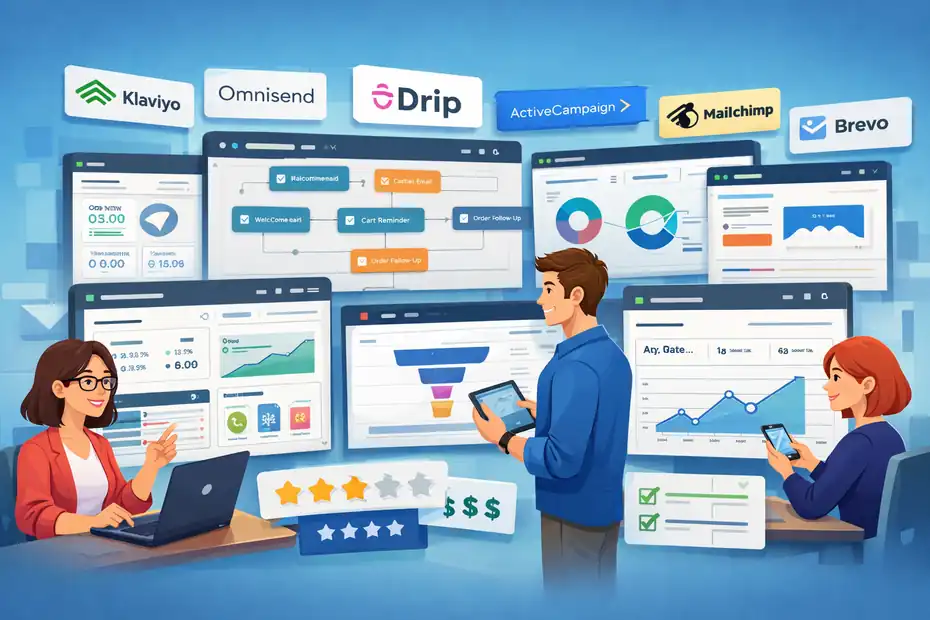
Better email marketing tools for ecommerce are not just about sending prettier campaigns. They help you segment shoppers by behavior, automate revenue flows, connect tightly with your store, and show you which emails actually drive orders.
If you are trying to grow without relying only on paid ads, picking the right platform matters a lot. I’ve seen too many stores choose based on brand familiarity, then outgrow the tool six months later.
This guide will help you compare the strongest options, understand where each one wins, and choose a platform that fits your store stage and growth goals.
What Makes An Email Tool “Better” For Ecommerce?
A better ecommerce email platform does three things well: it understands store data, it automates based on behavior, and it reports revenue clearly enough that you can make smarter decisions.
That sounds simple, but in practice, many tools are good at newsletters and only average at ecommerce.
Store Data Matters More Than Fancy Templates
When someone views a product, adds to cart, starts checkout, buys, or goes quiet for 60 days, your email tool should turn that behavior into action. That is the real difference between a generic email platform and a tool built for ecommerce.
A strong platform should track at least these signals:
- Browse behavior: What products people viewed but did not buy
- Cart behavior: What they added, removed, or abandoned
- Purchase history: First order, repeat orders, average order value, and lifetime value
- Engagement signals: Opens, clicks, site visits, and inactivity windows
I believe this is where many stores make their first expensive mistake. They choose a platform that can “send campaigns,” but not one that can build dynamic customer groups around real shopping behavior. That usually leads to blunt promotions, lower conversion rates, and weak repeat purchase performance.
Automation Should Save Time And Recover Revenue
Good ecommerce email tools come with prebuilt flows like welcome series, abandoned cart, browse abandonment, back-in-stock, post-purchase, and win-back.
Klaviyo highlights prebuilt flows, advanced segmentation, product recommendations, and back-in-stock alerts in its Shopify integration pages, while Omnisend emphasizes automated product recommendations and sales-focused workflows for ecommerce brands.
That matters because flows usually outperform one-off campaigns over time. In plain English, campaigns create spikes, but automations build a system.
Reporting Needs To Tie Back To Revenue
Benchmarks help, but revenue attribution matters more. Mailchimp’s published benchmarks show ecommerce campaigns averaging a 29.81% open rate and 1.74% click rate, which gives you a useful baseline. But no serious store should stop at opens and clicks. You need to know which flow, segment, and send actually moved orders.
My rule is simple: If a platform cannot help you answer “which email made money?” it is not a better email marketing tool for ecommerce growth.
Quick Comparison Of The 7 Best Options
Before we go deep, here is the practical snapshot. None of these tools are perfect. Each one fits a different type of store.
| Tool | Best For | Starting Point | Main Strength | Main Limitation |
|---|---|---|---|---|
| Klaviyo | Fast-growing Shopify and DTC brands | Free plan with up to 250 profiles and 500 emails/month | Deep segmentation and ecommerce automations | Can get expensive as list size grows |
| Omnisend | Small to mid-sized stores that want fast setup | Free plan with 500 emails/month for up to 250 contacts; paid plans start around $16/month | Strong ecommerce value and easy automation | Less flexible than heavier platforms for edge cases |
| Drip | Brands that want behavior-first automation | Starts at $39/month for 1–2,500 people | Clean segmentation and lifecycle logic | Smaller ecosystem footprint than bigger rivals |
| ActiveCampaign | Stores needing powerful automation depth | Starts at $15/month | Advanced automation and segmentation | Setup can feel heavier for beginners |
| Mailchimp | Stores that want familiarity and broad small-business features | Free tier for up to 250 contacts; paid plans scale by contacts | Easy to start and widely known | Ecommerce depth is weaker than specialist tools |
| Brevo | Brands that care about send-based pricing and transactional messaging | Pricing varies by send volume; starter-level plans available | Marketing + CRM + transactional email in one place | Less ecommerce-native than top DTC-focused tools |
| GetResponse | Mid-sized brands wanting funnels, automation, and product recommendations | Plans from $13.30/month; monthly plans from $19 for up to 1,000 subscribers | Good all-in-one value with ecommerce features | Interface and plan structure can feel broad rather than laser-focused |
Klaviyo: Best For Serious Ecommerce Segmentation
Klaviyo is the platform I would look at first for most Shopify-led ecommerce brands. It has become the default recommendation for a reason: it is very good at turning store behavior into targeted email and SMS campaigns.
Why Klaviyo Works So Well For Growth Stores
Klaviyo’s free plan includes up to 250 profiles and 500 emails per month, plus reporting and some mobile messaging credits. Its Shopify integration highlights advanced segmentation, prebuilt automations, AI recommendations, personalized product recommendations, and back-in-stock alerts.
That combination matters because growth usually comes from relevance, not volume. Imagine you run a skincare store. With Klaviyo, you can build segments like:
- First-time buyers of cleanser but not moisturizer
- High-value shoppers with 2+ purchases in 90 days
- Browsed sunscreen three times but never purchased
- Customers nearing replenishment timing
That is where revenue compounds. You stop blasting one offer to everyone and start matching messages to buying intent.
Where Klaviyo Can Feel Expensive
The tradeoff is cost creep. Klaviyo is generous enough to test with, but once your list and send volume grow, the platform becomes a bigger line item. I suggest it when you already have enough margin, repeat-purchase potential, or average order value to justify deeper personalization.
In my experience, Klaviyo is worth the money when your store already has traction. If you have almost no traffic and no repeat customers yet, you may not feel the benefit fast enough.
Who Should Choose Klaviyo
Choose Klaviyo if you want the strongest mix of ecommerce-native data, segmentation, and automation. It is especially strong for Shopify brands that plan to invest in flows, list growth, and lifecycle marketing rather than just weekly promos.
Omnisend: Best Value For Small And Mid-Sized Ecommerce Brands
Omnisend is one of the easiest tools to recommend when a store wants ecommerce features without Klaviyo-level pricing pressure from day one.
It is practical, ecommerce-focused, and easier to launch quickly.
Why Omnisend Punches Above Its Price
Omnisend’s free plan supports up to 500 emails per month for 250 contacts, and the company says you can explore all features on that plan with send limits. Paid plans on its pricing page start around $16 per month, with a higher Pro tier around $59 per month before promotional discounts. Omnisend also highlights AI-assisted forms, segments, and product recommendations.
The reason stores like it is simple: you get a lot of ecommerce value early. Abandoned cart, welcome flows, product recommendations, forms, SMS options, and omnichannel logic are all baked into the platform’s positioning.
A vendor-reported claim from Omnisend says its merchants see $79 earned for every $1 spent, which is obviously not a guaranteed result, but it does reflect how heavily the tool is built around commerce outcomes rather than generic email sending.
Where Omnisend Fits Best
I suggest Omnisend for stores in this situation:
- You want fast setup
- You sell through Shopify or WooCommerce
- You need core ecommerce flows right away
- You do not want a giant learning curve
Think of Omnisend as the “less headache, faster launch” option. If your team is small, that matters more than people admit.
Where Omnisend Falls Short
Omnisend is strong, but it can feel less infinitely flexible than platforms built for more custom automation logic.
For many stores, that is totally fine. For advanced operators with complex data models, it may feel a little more boxed in over time.
Drip: Best For Behavior-Driven Lifecycle Marketing
Drip has always felt like a smart operator’s tool. It is not always the loudest brand in the room, but it is very good when your strategy depends on segmentation and lifecycle sequences.
Why Drip Is Better Than Many Generic Alternatives
Drip starts at $39 per month for 1–2,500 people and includes unlimited email sends, dynamic segments, onsite campaigns, up to 50 workflows, open API access, free migration, and personalized onboarding.
Drip also emphasizes deep behavior-based segmentation and says customers using segments earn 5x more revenue than those who do not.
That second figure is vendor-reported, so I would treat it as directional rather than universal, but it still tells you where the platform’s strength lives.
What I like about Drip is how naturally it supports behavior-first messaging. You can build flows around things like:
- Category interest
- Repeat browse behavior
- Purchase gaps
- Product affinity
- Revenue tiers
- High-intent but unconverted visitors
For a coffee subscription brand, for example, you could route buyers into separate sequences based on roast preference, replenishment timing, and whether they bought one-time or subscription-first.
When Drip Is The Right Choice
Drip is a strong fit when your store has enough customer data to make segmentation meaningful. It is less about sending “beautiful newsletters” and more about building a lifecycle system that nudges the right buyer at the right moment.
I would choose Drip over trendier tools when I care more about logic and behavioral targeting than broad all-in-one extras.
The Tradeoff
The downside is ecosystem mindshare. Klaviyo and Omnisend tend to dominate more ecommerce conversations, so Drip sometimes gets skipped. That does not make it weaker.
It just means you may need to be more intentional when evaluating integrations and support resources for your stack.
ActiveCampaign: Best For Advanced Automation Depth
ActiveCampaign is a very strong choice when you want automation power that goes beyond standard ecommerce flows.
It is not as ecommerce-branded as Klaviyo or Omnisend, but it can absolutely work for stores that want more control.
What ActiveCampaign Does Especially Well
ActiveCampaign says plans start at $15 per month, includes marketing automation, email marketing, and standard CRM and ecommerce integrations, and offers more than 1,000 integrations overall.
Its help docs also show ecommerce segment conditions for Shopify, WooCommerce, BigCommerce, Squarehttps://jakdigitalhub.com/squarespace-j, and custom integrations.
That matters if your customer journey is more layered than the usual welcome-cart-post-purchase system. You can create complex automations based on:
- Site visits
- Tags
- Field changes
- Product purchases
- Funnel steps
- Team actions
- Lead or customer scoring logic
In plain language, ActiveCampaign lets you build more “if this, then that” marketing than most entry-level tools.
Best Use Cases For Ecommerce
I suggest ActiveCampaign when your store has one of these needs:
- Complex segmentation rules
- Sales team and marketing team overlap
- B2B plus ecommerce hybrid selling
- Longer consideration cycles
- Multi-step nurturing beyond standard promotions
For example, a high-ticket furniture brand might need education sequences, quote follow-up, VIP outreach, and post-purchase care across a longer buying cycle. ActiveCampaign handles that kind of layered communication well.
The Catch
It can feel heavier to set up. If you are a solo founder who just wants abandoned cart and a welcome flow live this week, Omnisend may feel easier.
But if you want serious automation architecture, ActiveCampaign is one of the better email marketing tools for ecommerce teams that think in systems.
Mailchimp: Best For Familiarity And Simplicity
Mailchimp is still one of the best-known names in email marketing, and that matters for some businesses. Familiar tools reduce friction. Sometimes that alone gets a team moving.
Why Mailchimp Still Makes Sense For Some Stores
Mailchimp offers a free plan for up to 250 contacts, while its Essentials plan starts with 500 contacts and includes marketing automation flows. The company also says users of its automation flows generated materially more orders and revenue than bulk-email-only users in its internal aggregate analysis.
Mailchimp is a reasonable pick if:
- You are just getting started
- Your store is still small
- You want a known interface
- You also need broader small-business marketing features
Its benchmarks are also helpful for newer teams trying to understand normal performance ranges. As noted earlier, Mailchimp reports ecommerce averages around a 29.81% open rate and 1.74% click rate.
Where Mailchimp Loses Ground In Ecommerce
The issue is not that Mailchimp is bad. It is that specialist ecommerce tools have moved further ahead on behavior-based automation, product data use, and lifecycle targeting.
If you run a store with 2,000 products, multiple collections, repeat purchase windows, and heavy promotional calendars, Mailchimp can start feeling a bit broad rather than deep.
My Honest Take
I would use Mailchimp when ease and familiarity are more important than best-in-class ecommerce segmentation.
For a simple catalog and a small team, that can be enough. For an aggressive DTC growth plan, I would usually look elsewhere first.
Brevo: Best For Brands That Need Marketing Plus Transactional Email
Brevo is interesting because it combines marketing tools with transactional messaging, CRM, SMS, chat, and more. That makes it appealing for ecommerce brands that want fewer separate systems.
What Makes Brevo Stand Out
Brevo positions itself as an all-in-one customer engagement platform with email marketing, SMS, CRM, live chat, chatbot, and transactional messaging. It also emphasizes pricing based on email sends in some of its comparison content, which can be attractive if your contact database is large but not constantly mailed.
Brevo’s help center defines transactional email as real-time messages triggered by actions like purchases, password resets, and account activation.
That matters for ecommerce because order confirmations, shipping updates, login messages, and post-purchase communications often live in different systems. Brevo can help bring more of that into one place.
Best Fit For Brevo
Brevo is a good fit when:
- You want marketing and transactional email together
- Your send volume matters more than raw contact count
- You need CRM-style contact management
- You want a broader communication stack
Imagine you run a mid-sized store with a custom site, a service layer, and support workflows. In that setup, Brevo can make more sense than a DTC-first platform that mostly revolves around promotions and flows.
Where Brevo Is Less Ideal
Brevo is not as ecommerce-native in perception or workflow design as Klaviyo or Omnisend. So while it is powerful, I would not call it the first choice for a pure-play Shopify brand obsessed with collection-based merchandising and revenue-per-recipient optimization.
GetResponse: Best All-In-One Value For Growing Mid-Sized Stores
GetResponse often gets overlooked, but it offers a surprisingly broad set of ecommerce-relevant features, especially for brands that want automation, landing pages, forms, funnels, and recommendations in one platform.
Why GetResponse Is Worth Considering
GetResponse says plans start at $13.30 per month, and its monthly pricing starts at $19 for up to 1,000 subscribers. Its Starter plan includes unlimited sends, forms, popups, landing pages, and one custom automation workflow.
The Marketer plan adds unlimited automation workflows, advanced segmentation, abandoned cart recovery, sales funnels, promo codes, and revenue reports. It also offers AI-powered product recommendations and says its email platform supports 99% deliverability.
That is a solid package for the price, especially if you want one tool to do more of the stack.
Where GetResponse Fits Best
I like GetResponse for stores that want more than email alone but do not want enterprise-level complexity. It works well for teams that need:
- Forms and popups
- Landing pages
- Revenue reporting
- Abandoned cart recovery
- Product recommendations
- Broader funnel-building tools
A brand running seasonal product launches could use GetResponse to build signup pages, prelaunch sequences, launch emails, cart recovery, and follow-up offers without stitching together as many third-party tools.
What To Watch Out For
The platform is broad, which is useful, but that breadth can also make it feel less laser-focused. If your only priority is hyper-specific ecommerce lifecycle marketing, Klaviyo or Drip may feel sharper.
If you want balanced value across email, automation, and funnel tools, GetResponse is very competitive.
10. How To Choose The Right Tool Without Regretting It
Choosing the right tool is less about feature checklists and more about matching software to your store’s current reality. The “best” platform for a $30 million DTC brand is not always the best one for a two-person Shopify shop.
Use This Decision Framework
Here is the shortcut I recommend:
- Choose Klaviyo: If you want top-tier ecommerce segmentation and already have traction
- Choose Omnisend: If you want the best balance of ecommerce power and ease
- Choose Drip: If your strategy is heavily behavior- and lifecycle-driven
- Choose ActiveCampaign: If you need deeper automation logic than standard ecommerce flows
- Choose Mailchimp: If you value familiarity and your needs are still simple
- Choose Brevo: If you need transactional email and broader communication tools together
- Choose GetResponse: If you want all-in-one value with funnels and ecommerce extras
Ask These Three Questions First
- Which flows do I need live in the next 30 days?
- How important is deep segmentation to my revenue model?
- Will this pricing still make sense when my list doubles?
I suggest being brutally honest here. Many stores buy for future complexity they do not yet need, then never build the advanced system they imagined.
My Practical Recommendation
For many ecommerce brands, the safest first shortlist is Klaviyo, Omnisend, and Drip. Those three tend to cover the widest range of actual ecommerce needs without too much compromise.
Setup Essentials After You Pick A Platform
Once you choose a tool, the work that matters is not the logo in your tech stack. It is the setup quality. A powerful platform with bad data and weak flows still performs badly.
Start With These Core Assets
You should set up these first:
- Welcome flow: New subscribers, first-order push, brand positioning
- Abandoned cart flow: Fast reminder, objection handling, urgency
- Browse abandonment flow: Product interest follow-up before cart stage
- Post-purchase flow: Confirmation, education, cross-sell, review timing
- Win-back flow: Re-engage lapsed customers with relevance, not random discounts
Then create your first useful segments:
- New subscribers
- First-time customers
- Repeat customers
- VIP customers
- Engaged non-buyers
- Lapsed customers
Keep Your Early Logic Simple
Do not build 27 branches on day one. I have seen that go badly. Start with clean, obvious paths and improve based on results.
A simple abandoned cart flow often works better than a complicated one with too many delays and offers. Clarity usually wins early.
Track The Right Metrics
Watch these numbers first:
- Flow revenue
- Revenue per recipient
- Conversion rate
- Unsubscribe rate
- Time to first purchase
- Repeat purchase rate
Those metrics tell you whether your email system is helping the business, not just generating activity.
Common Mistakes That Hold Ecommerce Email Back
Even with better email marketing tools for ecommerce, stores still underperform when strategy is sloppy. Most problems are not caused by the software itself.
Mistake 1: Sending The Same Campaign To Everyone
This is the classic error. New subscribers, VIPs, recent purchasers, and inactive contacts should not get the same message. Segmentation is not optional anymore.
Mistake 2: Discounting Too Early
I see this a lot. The first email offers 10%, the second offers 15%, and by week two the brand has trained customers to wait. Sometimes education, urgency, reviews, or product context works better than a deeper coupon.
Mistake 3: Ignoring Post-Purchase Email
Many stores obsess over abandoned cart and barely touch post-purchase. That is leaving money on the table. Post-purchase is where retention, reviews, referrals, replenishment, and cross-sells start.
Mistake 4: Measuring Vanity Metrics Only
Open rates still matter, but they do not pay invoices. Revenue and conversion matter more. Use benchmarks as context, not as the whole story.
Mistake 5: Letting The List Rot
Inactive subscribers hurt performance over time. Build a sunset or re-engagement policy. Healthy deliverability is part of growth, not an afterthought.
How To Get More Revenue From Whatever Tool You Choose
The platform matters, but the optimization layer matters more once the basics are live. This is where stores separate from competitors who just “send emails.”
Focus On Segment-Level Offers
Instead of one sitewide promo, test offers by buyer stage:
- New visitor: Education and proof
- First-time buyer: Trust and product fit
- Repeat customer: Bundles and replenishment
- VIP: Early access and exclusives
- Lapsed customer: Reactivation with tailored incentive
That alone can lift revenue without increasing send volume.
Improve Timing Before You Rewrite Everything
A lot of brands rewrite copy when timing is the real problem. Try testing:
- Cart reminder at 1 hour versus 4 hours
- Win-back at 45 days versus 60 days
- Cross-sell at 10 days versus 21 days
- Browse follow-up same day versus next day
I recommend testing one major variable at a time. Otherwise, you will not know what actually moved performance.
Use Product Recommendations Carefully
Dynamic recommendations can help, but only when they match intent. “Best sellers” is fine. “Related to what you viewed” is usually better. “Replenish what you bought 28 days ago” is even better for the right categories.
Build Around Customer Lifetime Value
The stores that win with email in 2026 are not just trying to squeeze one extra order from a campaign. They are building systems that increase customer lifetime value. That means better onboarding, more relevant follow-up, smarter replenishment, and stronger retention loops.
Mailchimp cites a study saying email marketing revenue is projected to grow 287% worldwide from 2024 to 2032, which reinforces a bigger point: owned channels still matter, and likely more over time, not less.
Final Verdict: Which Tool Is Best For Your Store?
There is no universal winner, but there is a most sensible winner for your stage.
If you want my cleanest recommendation, here it is. Klaviyo is the strongest choice for serious ecommerce brands that want deep segmentation and lifecycle growth.
Omnisend is the best value pick for many small and mid-sized stores. Drip is excellent when behavioral segmentation is central to your strategy.
ActiveCampaign is the best fit for more advanced automation logic. Mailchimp is fine for simpler needs and familiar workflows.
Brevo is smart when transactional messaging and broader communication matter.
GetResponse is a strong all-in-one option for teams that want ecommerce features plus funnel tools.
My honest advice is not to chase the most popular logo. Choose the platform that matches your current complexity, your next 12 months of growth, and the kind of email program you will actually build. That is how better email marketing tools for ecommerce turn into better revenue, not just better software.
FAQ
What are the best email marketing tools for ecommerce?
The best email marketing tools for ecommerce include Klaviyo, Omnisend, Drip, ActiveCampaign, Mailchimp, Brevo, and GetResponse. These platforms offer advanced automation, segmentation, and revenue tracking features designed specifically for online stores, helping increase conversions and customer retention.
How do email marketing tools help ecommerce growth?
Email marketing tools help ecommerce growth by automating key customer journeys like welcome emails, abandoned cart recovery, and post-purchase follow-ups. They use customer data to send personalized messages, which increases engagement, repeat purchases, and overall customer lifetime value.
Which email marketing tool is best for beginners in ecommerce?
For beginners, Omnisend and Mailchimp are often the easiest to start with. They offer simple interfaces, prebuilt automation workflows, and affordable plans. These tools allow new ecommerce store owners to quickly launch campaigns and basic automations without technical complexity.
Is Klaviyo worth it for ecommerce businesses?
Klaviyo is worth it for ecommerce businesses that want advanced segmentation and automation. It integrates deeply with platforms like Shopify and provides detailed customer data insights. While it can be more expensive, many stores find the increased revenue justifies the cost.
What features should I look for in ecommerce email tools?
Look for features like behavior-based automation, advanced segmentation, revenue tracking, product recommendations, and ecommerce integrations. These features ensure your emails are personalized and timely, which improves conversion rates and helps build long-term customer relationships.

Juxhin B is a digital marketing researcher and founder of JAK Digital Hub, specializing in email marketing software, marketing automation platforms, and digital growth tools. His work focuses on software testing, platform comparisons, and real-world performance analysis to help businesses choose the right marketing technology.
Related posts:
 Best Email Tools Compared: 7 That Actually Convert
 AWeber For New Bloggers: Is It The Easiest Starter Email Tool?
 Best Email Tools to Turn Subscribers Into Sales
 Moosend vs MailerLite Pricing: Which One Saves You More?
 7 GetResponse Alternatives For Small Business Growth
 Email Automation Software With Better Deliverability Ranked