Table of Contents
Some links on JAK Digital Hub are affiliate links, meaning we may earn a small commission at no extra cost to you. Read full disclaimer.
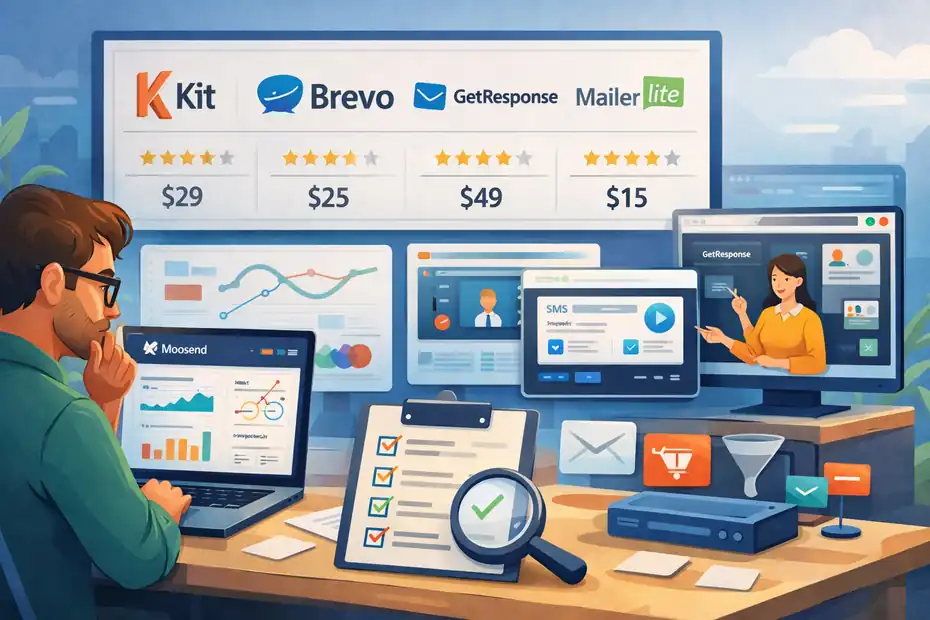
Is moosend worth the price is a question many creators, bloggers, and small businesses ask once they start comparing email marketing tools. On the surface, Moosend looks affordable and beginner-friendly—but pricing alone doesn’t tell the whole story.
The real value depends on automation power, deliverability, scaling costs, and whether competitors offer stronger features for the same or lower investment.
If you’re deciding whether Moosend is actually worth paying for in 2026—or if better deals exist—this breakdown explores the real trade-offs and compares it with alternatives that marketers commonly switch to.
Moosend Pricing Breakdown: What You Actually Pay
Understanding pricing is the first step in answering the question: is moosend worth the price.
On paper, Moosend looks extremely affordable, but the real value depends on subscriber growth, automation needs, and hidden limitations that appear as your email list expands.
Moosend Free Plan Limitations And Hidden Trade-Offs
Many people discover Moosend through its free plan. At first glance, it seems like a generous offer—especially for beginners who want to experiment with email marketing before committing to a paid platform.
However, the free plan comes with important limitations that can affect real-world marketing workflows.
Here are the key restrictions you’ll encounter:
- Limited subscriber capacity
- Moosend branding added to emails
- Some advanced automation features unavailable
- Limited access to premium templates and analytics
From what I’ve seen, the free plan works best for testing campaigns or building your first small list. Imagine you’re running a small blog with a lead magnet. You collect 300 subscribers and send a weekly newsletter. In that case, the free plan may be enough for a while.
But once you begin using advanced segmentation or automation funnels—like abandoned cart emails or multi-step lead nurturing—you’ll quickly hit feature limitations.
Another subtle trade-off is branding. Emails sent from the free plan include Moosend branding, which can make your campaigns look less professional if you’re building a serious brand.
I usually recommend the free plan for experimentation, not long-term marketing.
Moosend Pro Plan Pricing Based On Subscriber Count
Moosend’s paid structure is based on subscriber count. This pricing model is common in email marketing, but it can become expensive as your list grows.
Let me break it down in simple terms.
Instead of charging for the number of emails you send, Moosend charges based on how many contacts you store in your account.
That means even inactive subscribers increase your monthly cost.
Typical pricing tiers look something like this:
| Subscribers | Approx Monthly Cost |
|---|---|
| 1,000 | ~$9 |
| 2,000 | ~$16 |
| 5,000 | ~$32 |
| 10,000 | ~$64 |
Compared with premium tools, this is still relatively affordable.
But here’s something many beginners overlook.
If your list grows quickly—for example through lead magnets, giveaways, or ecommerce promotions—your monthly price can double or triple faster than expected.
I’ve seen many bloggers start with a $9 plan and suddenly reach $60+ per month within a year.
That’s why pricing scalability is a major factor when deciding if Moosend is worth the price.
Automation, Landing Pages, And Email Limits Included
One reason Moosend attracts many marketers is that the paid plans unlock several useful features without charging extra add-ons.
Once you upgrade to the Pro plan, you typically gain access to:
- Unlimited email campaigns
- Automation workflows
- Landing page builder
- Signup forms and popups
- Audience segmentation tools
- Campaign analytics
The automation builder is particularly important. Instead of sending manual newsletters every week, you can create automated email sequences.
For example:
A blogger might build a 5-email welcome sequence that automatically sends when someone downloads a free guide.
An ecommerce store could trigger:
- abandoned cart reminders
- post-purchase follow-ups
- product recommendation emails
These automated workflows save enormous time.
In my experience, automation is where most of the real value in email marketing comes from. One well-designed automation sequence can generate sales for months without manual effort.
This is one area where Moosend delivers solid value relative to its price.
Extra Costs For Enterprise Features And Advanced Needs
While the Pro plan includes many useful features, some capabilities require custom enterprise pricing.
These advanced features typically include:
- Dedicated IP addresses
- SSO login systems
- advanced security permissions
- priority support
- custom infrastructure
Large companies sometimes need these features to maintain strict security policies or send extremely high email volumes.
For most bloggers, freelancers, and small ecommerce businesses, enterprise features are unnecessary.
However, agencies managing multiple client campaigns might eventually need these advanced options.
And once you move into enterprise territory, the pricing becomes custom—meaning costs can increase significantly depending on your usage.
So again, the answer to is moosend worth the price partly depends on your business scale.
Real Monthly Cost Scenarios For 1K, 5K, And 10K Subscribers
Let’s walk through a realistic growth scenario.
Imagine you start a content website and use email marketing to grow your audience.
Your email list might grow like this:
| Subscriber Size | Monthly Cost | Typical Use Case |
|---|---|---|
| 1,000 | ~$9 | New blog or early-stage creator |
| 5,000 | ~$32 | Growing audience or small ecommerce store |
| 10,000 | ~$64 | Established content brand |
Now consider a practical example.
A blogger with 10,000 subscribers sending weekly emails might generate affiliate commissions or digital product sales.
If those emails generate $500–$1,000 monthly revenue, paying $64 for email software is extremely reasonable.
But if your email list isn’t monetized yet, even $30–$60 per month can feel expensive.
This is why pricing alone doesn’t determine value. What really matters is whether the tool helps you turn subscribers into revenue.
Core Features That Influence Moosend’s Real Value
Pricing is only part of the equation. To really decide if moosend is worth the price, you need to evaluate the features that affect real marketing results.
Some features directly impact conversion rates, automation efficiency, and campaign performance.
Visual Automation Builder For Customer Journeys
Automation is where modern email marketing truly shines.
Moosend includes a visual automation builder that allows you to design complete customer journeys using drag-and-drop workflow blocks.
Think of it like a flowchart for your email strategy.
Instead of manually sending emails, you build automated paths triggered by user actions.
For example:
A typical automation funnel might look like this:
- User downloads a free guide
- Welcome email sent instantly
- Educational email sent two days later
- Product recommendation after engagement
Each step is triggered automatically.
From what I’ve seen, this automation builder is one of Moosend’s strongest features. The interface is simple enough for beginners but still powerful enough to build multi-step funnels.
Practical example:
Imagine you run an online course website.
You could create a workflow like this:
- Visitor downloads free checklist
- 3-email educational series
- invitation to webinar
- automated course promotion
Once built, the entire system runs automatically.
That kind of automation can save dozens of hours every month.
Email Template Library And Drag-And-Drop Builder
Designing email campaigns from scratch can be time-consuming, especially for beginners.
Moosend solves this with a drag-and-drop email builder and a library of ready-made templates.
These templates cover common campaign types such as:
- newsletters
- product promotions
- announcements
- event invitations
- welcome emails
The builder works similarly to website page builders.
You simply drag elements into place:
- text blocks
- images
- buttons
- dividers
- product sections
I personally appreciate tools that reduce design friction. When creating campaigns quickly, you don’t want to worry about HTML formatting.
For example:
If you run an ecommerce store, you can insert product blocks with images, prices, and call-to-action buttons.
Within minutes, you can design a professional campaign without touching code.
That simplicity is one reason many beginners choose Moosend over more complex platforms.
Personalization Tools Using Subscriber Behavior Data
Email marketing works best when messages feel personal.
Moosend includes several personalization features that allow you to tailor emails based on subscriber behavior.
Some examples include:
- inserting subscriber names dynamically
- sending product recommendations based on browsing activity
- segmenting users by engagement level
Let’s say someone visits a specific product page but doesn’t purchase.
You could automatically send an email like this:
“Still thinking about the wireless headphones you viewed?”
That level of behavioral targeting significantly improves click-through rates.
In many email campaigns, personalization alone can increase engagement by 20–30%, according to multiple email marketing studies.
The key idea here is simple:
The more relevant your message is, the more likely people will click.
Built-In Landing Pages And Basic Lead Generation Tools
Another feature included in Moosend is a built-in landing page builder.
Landing pages are standalone pages designed to capture leads—usually through a form offering a free resource.
For example:
- free ebook
- webinar registration
- discount code
- email newsletter signup
Instead of needing separate software, you can create landing pages directly inside the platform.
Typical landing page elements include:
- headline
- description
- signup form
- images
- call-to-action buttons
This can be useful if you want a simple system without managing multiple tools.
For instance, a blogger could create a landing page offering a free SEO checklist.
Traffic from Pinterest, Google, or social media can land on that page and subscribe to the email list automatically.
While Moosend’s landing page builder isn’t as advanced as dedicated page builders, it works well for basic lead generation campaigns.
Analytics, Reporting Depth, And Campaign Performance Tracking
Once you start sending campaigns, tracking results becomes essential.
Moosend includes built-in analytics that track several key metrics:
- open rate
- click-through rate
- unsubscribes
- conversions
- bounce rates
These metrics help you understand how your audience interacts with your emails.
For example:
If you send two different subject lines, you can compare open rates to see which performs better.
This process—called A/B testing—is a powerful optimization strategy.
In many campaigns, small improvements can make a huge difference.
For example:
- increasing open rate from 18% to 24%
- increasing click rate from 3% to 6%
Those improvements can double your traffic or sales from the same email list.
In my experience, analytics are often overlooked by beginners, but they’re where the real optimization opportunities live.
Moosend Deliverability And Performance Reality Check
One of the most important factors in email marketing is deliverability.
Even the best email software is useless if your emails never reach the inbox. To truly answer the question is moosend worth the price, we need to examine how well it performs behind the scenes.
Email Deliverability Reputation Compared To Competitors
Deliverability refers to how successfully your emails reach subscribers’ inboxes instead of spam folders.
This depends on multiple factors:
- sending infrastructure
- sender reputation
- authentication setup
- spam filtering algorithms
Moosend has built a fairly solid reputation in this area. Based on industry benchmarks and independent testing platforms like EmailToolTester and Mailmodo reports, many email marketing tools achieve deliverability rates between 83% and 90%.
Moosend generally falls within that range.
In practical terms, that means most campaigns successfully reach the inbox.
However, larger competitors often invest more heavily in deliverability infrastructure. Platforms focused on enterprise email marketing sometimes achieve slightly higher consistency during massive campaigns.
But for most bloggers, creators, and small businesses sending thousands—not millions—of emails, the difference is rarely noticeable.
From what I’ve seen, deliverability problems usually come from poor list hygiene rather than the software itself.
For example:
- sending emails to inactive subscribers
- purchasing email lists
- sending overly promotional messages
Avoid those mistakes, and Moosend’s deliverability is typically reliable enough for most marketing strategies.
Inbox Placement Rates For Promotional Campaigns
Inbox placement is slightly different from deliverability.
An email might technically be delivered but still land in the promotions tab or spam folder instead of the main inbox.
For marketers, this distinction matters.
Most promotional emails naturally land in Gmail’s promotions tab. This is not necessarily a problem—it’s actually where many users expect marketing emails to appear.
However, the goal is to avoid the spam folder entirely.
Moosend performs reasonably well here because it allows proper sender authentication and good list management practices.
Some strategies that improve inbox placement include:
- using a recognizable sender name
- avoiding spam trigger words
- warming up new email domains gradually
- sending consistent campaigns instead of irregular blasts
I often suggest starting with smaller campaigns when launching a new list.
For example:
- Week 1: Send to 200 subscribers
- Week 2: Send to 500
- Week 3: Send to the full list
This gradual approach helps build sender reputation with email providers like Gmail and Outlook.
Infrastructure Reliability During Large Email Sends
Another important performance factor is infrastructure reliability.
When sending thousands of emails at once, your platform must handle the load without delays or system failures. Moosend uses cloud-based email infrastructure that distributes sending loads across multiple servers.
In practice, this means large campaigns usually process smoothly without crashing or freezing.
For example: Imagine an ecommerce store launching a Black Friday campaign. They might send emails to 50,000 subscribers simultaneously. If the platform struggles under heavy traffic, emails may send slowly or fail entirely.
Most modern email platforms—including Moosend—are designed to handle these situations.
Still, enterprise-focused platforms sometimes offer additional safeguards like dedicated IP infrastructure and advanced sending queues.
For the majority of businesses, though, Moosend’s infrastructure is more than capable of supporting typical campaign volumes.
Spam Protection And Authentication Setup Options
Email authentication is one of the most overlooked parts of email marketing setup.
If authentication is missing, email providers may flag your messages as suspicious—even if the content is legitimate.
Moosend supports the most important authentication standards:
- SPF (Sender Policy Framework)
- DKIM (DomainKeys Identified Mail)
These authentication methods confirm that your emails are genuinely sent from your domain.
Setting them up typically involves adding records to your domain’s DNS settings.
It might sound technical, but most platforms provide step-by-step instructions.
Once configured, authentication improves:
- inbox placement
- sender reputation
- trust with email providers
In my experience, many beginners skip this step. That’s a mistake.
Taking five minutes to configure SPF and DKIM can significantly improve deliverability across all future campaigns.
When properly configured, Moosend provides the essential tools needed to maintain a healthy sender reputation.
Where Moosend Struggles Compared With Competitors
To fairly answer the question is moosend worth the price, we also need to look at its weaknesses. Every email platform has trade-offs, and Moosend is no exception.
For many small businesses the tool works perfectly fine, but once your marketing becomes more advanced, you may start noticing a few limitations compared with larger platforms like Brevo, Kit, MailerLite, or GetResponse.
Let’s walk through the most common areas where users eventually outgrow Moosend.
Limited Native Integrations For Ecommerce Platforms
Integrations are what connect your email marketing tool with the rest of your business stack.
For example, an ecommerce store might need integrations with:
- Shopify
- WooCommerce
- Stripe
- CRM platforms
- analytics tools
Moosend does support integrations with many platforms, but the list is smaller compared with some competitors. In many cases, you’ll rely on middleware tools like Zapier to connect everything.
Zapier is useful, but it adds complexity and sometimes additional costs.
Let me give you a realistic example.
Imagine you run a Shopify store selling handmade accessories. Ideally, your email tool should automatically sync:
- new customers
- product purchases
- abandoned carts
- browsing activity
Moosend supports ecommerce integrations, but the data syncing isn’t always as deep as platforms built specifically for ecommerce automation.
In contrast, platforms like GetResponse or Brevo often provide deeper native integrations with ecommerce systems.
That means:
- more behavioral data
- better automation triggers
- fewer technical workarounds
For simple newsletters, Moosend works fine. But if your store relies heavily on advanced product-based automations, the integration ecosystem can feel a bit limited.
Advanced Automation Limitations For Complex Funnels
Earlier we talked about Moosend’s visual automation builder—and it’s genuinely easy to use.
However, ease of use sometimes comes with reduced complexity.
If you’re running basic automations like:
- welcome sequences
- abandoned cart reminders
- simple nurture campaigns
Moosend handles these tasks well.
But advanced marketers often build far more complex funnels.
For example:
A SaaS company might want automation that includes:
- lead scoring
- multi-channel messaging (email + SMS)
- behavioral triggers across multiple platforms
- CRM-based segmentation
- dynamic content personalization
This is where some limitations appear.
Moosend’s automation workflows are powerful for straightforward funnels, but they lack some of the deeper conditional logic available in advanced marketing platforms.
Let me explain this in simple terms.
Think of automation like a decision tree.
Basic example:
Subscriber joins list → send welcome email
Advanced example:
Subscriber joins list
→ Did they open email?
→ Did they click link?
→ Did they visit product page?
→ Did they purchase?
→ Send different sequence depending on behavior
Moosend supports some of this logic, but tools designed for complex marketing ecosystems typically offer more granular control.
For many bloggers and small businesses, this isn’t a problem. But growth-stage companies sometimes need deeper automation systems.
CRM Capabilities Compared To Modern Email Platforms
CRM stands for Customer Relationship Management.
In simple terms, it’s software used to manage relationships with leads and customers.
Some modern email marketing tools have evolved into full marketing hubs with built-in CRM systems.
For example:
| Platform | Built-In CRM | Sales Pipelines | Lead Scoring |
|---|---|---|---|
| Moosend | Basic | No | Limited |
| Brevo | Yes | Yes | Yes |
| GetResponse | Partial | Limited | Yes |
| Kit | Creator-focused | No | Tag-based |
Moosend focuses primarily on email marketing, not sales management.
That means you won’t find features like:
- sales pipelines
- advanced contact scoring
- deal tracking
- sales team collaboration tools
For many creators and bloggers, this doesn’t matter.
But if you run a B2B company or SaaS product, your marketing and sales teams often need tight CRM integration.
For those use cases, Moosend may feel too lightweight.
Segmentation Depth For Behavioral Targeting Campaigns
Segmentation is one of the most powerful techniques in email marketing.
Instead of sending the same email to everyone, segmentation allows you to target smaller groups based on behavior or interests.
For example:
You might segment your list by:
- purchase history
- location
- engagement level
- website activity
- product category interest
Moosend includes segmentation features, and they work well for basic targeting.
However, more advanced platforms often support deeper behavioral data.
For example, advanced segmentation might include triggers like:
- visited product page three times
- clicked pricing page but didn’t purchase
- watched 80% of a webinar
These kinds of behavioral signals can dramatically improve conversion rates.
According to multiple marketing studies, segmented campaigns can generate up to 760% higher revenue than non-segmented campaigns.
Moosend allows some segmentation, but the depth of behavioral tracking is slightly more limited compared with specialized marketing automation platforms.
For many businesses, it’s still enough. But high-growth companies sometimes need deeper targeting capabilities.
When Moosend Is Actually Worth The Price
After exploring the strengths and weaknesses, let’s answer the big question: is moosend worth the price for your situation?
The honest answer is: it depends on your stage of business.
For some users, Moosend is one of the best value email marketing tools available.
Best Fit For Small Subscriber Lists Under 5,000
If your email list is still relatively small, Moosend is often a very cost-effective choice.
Here’s why.
Most email platforms increase pricing quickly as your subscriber count grows. But Moosend keeps pricing relatively low in the early stages.
For example:
| Subscriber Size | Approx Monthly Price |
|---|---|
| 1,000 | ~$9 |
| 2,500 | ~$24 |
| 5,000 | ~$32 |
For new creators, this is extremely accessible.
Imagine you’re starting a niche blog about travel gear.
You launch a lead magnet like: “10 Packing Hacks For Carry-On Travelers”
As your list grows to 2,000 subscribers, paying around $20–$25 per month for email marketing is very reasonable.
In fact, one well-performing affiliate email could easily cover the entire monthly cost.
For many small lists, Moosend provides more than enough functionality.
Ideal For Bloggers And Simple Newsletter Strategies
Bloggers often need a simple system to:
- collect email subscribers
- send weekly newsletters
- promote blog posts
- recommend affiliate products
Moosend works well for this type of workflow.
You don’t necessarily need advanced CRM features or enterprise automation.
Instead, what matters most is:
- easy campaign creation
- reliable deliverability
- basic automation sequences
For example, a typical blogging email setup might include:
- Welcome email after signup
- Weekly newsletter
- Occasional affiliate promotions
Moosend can easily handle this structure.
From what I’ve seen, many bloggers overestimate how complex their email system needs to be.
In reality, a simple, consistent newsletter strategy often performs better than overly complicated automation funnels.
Good Option For Beginners Avoiding Expensive Tools
One of the biggest frustrations beginners face is pricing.
Some popular email platforms start affordable but become expensive very quickly.
When you’re still experimenting with online business models, committing to high monthly software costs can feel risky.
This is where Moosend shines.
It offers a relatively low barrier to entry without sacrificing essential features.
You still get:
- automation workflows
- landing pages
- segmentation tools
- campaign analytics
For someone learning email marketing for the first time, this feature set is more than sufficient.
I often suggest beginners focus less on tools and more on learning how email marketing works.
Once you understand:
- list building
- email engagement
- conversion psychology
Switching platforms later becomes much easier.
Budget Email Marketing For Early-Stage Businesses
Early-stage startups and small businesses often operate with tight budgets.
If you’re managing marketing expenses carefully, Moosend provides a solid balance between price and capability.
For example:
Imagine you launch a small online store selling handmade candles.
Your marketing strategy might include:
- collecting emails from website visitors
- sending product launch announcements
- offering seasonal promotions
You don’t need a complex enterprise marketing platform to run those campaigns.
Moosend gives you enough tools to build:
- automated welcome sequences
- product announcement emails
- discount campaigns
All while keeping your monthly marketing costs relatively low.
For businesses still validating their product or audience, this affordability can be extremely valuable.
When Moosend Stops Being Cost-Effective
Even though Moosend offers strong value for beginners, there are situations where it becomes less competitive.
At certain growth stages, other platforms may provide better long-term value.
Rapid Subscriber Growth Increasing Monthly Costs
One challenge with subscriber-based pricing models is that costs increase as your list grows.
Let’s look at a typical growth scenario.
| Subscribers | Monthly Cost |
|---|---|
| 1,000 | ~$9 |
| 5,000 | ~$32 |
| 10,000 | ~$64 |
| 25,000 | ~$160+ |
If your list grows quickly, pricing can escalate faster than expected.
This often happens when:
- running paid traffic campaigns
- offering popular lead magnets
- building a viral content site
For example, a blog that grows from 2,000 to 20,000 subscribers within a year could see its email software cost increase significantly.
At that stage, some platforms offer pricing models based on email volume instead of subscriber count, which can sometimes be more cost-efficient.
Automation Limitations For Advanced Marketing Funnels
As businesses grow, marketing funnels become more sophisticated.
For example, a SaaS company might need automation that includes:
- onboarding sequences
- behavioral product education emails
- churn prevention campaigns
- upgrade offers
These funnels often require complex logic and deep user data integration.
Moosend’s automation builder works well for straightforward workflows, but advanced growth-stage companies sometimes require more flexibility.
In those cases, tools with deeper marketing automation ecosystems may offer better long-term scalability.
Scaling Challenges For Ecommerce And SaaS Businesses
Ecommerce and SaaS businesses often rely heavily on data-driven marketing automation.
Typical advanced workflows might include:
- dynamic product recommendations
- lifecycle marketing campaigns
- real-time behavioral triggers
For example:
An ecommerce store might want automation that sends:
- a reminder email if someone views a product three times
- a discount if they abandon the cart twice
- personalized recommendations after purchase
These advanced marketing systems require deeper data integration with ecommerce platforms.
Moosend supports ecommerce automation, but some platforms specialize more heavily in these types of workflows.
As businesses scale, they sometimes migrate to tools designed specifically for high-volume ecommerce marketing.
Feature Gaps For Agencies Managing Multiple Clients
Marketing agencies often manage campaigns for multiple clients simultaneously.
This introduces unique requirements, such as:
- multi-account management
- team permission controls
- white-label reporting
- advanced client dashboards
Moosend can handle multiple campaigns, but it wasn’t specifically designed as an agency management platform.
Agencies often need tools that support:
- separate workspaces
- detailed user permissions
- client-specific reporting dashboards
Without those features, managing multiple client accounts becomes less efficient.
For freelancers managing a few clients, Moosend may still work fine.
But larger agencies often prefer platforms designed specifically for multi-client marketing environments.
Brevo: A Stronger Deal For Transactional Email Needs
If you’re trying to decide is moosend worth the price, one of the most common alternatives people compare it with is Brevo (formerly Sendinblue). Brevo approaches email marketing differently, especially when it comes to pricing and multi-channel communication.
For many ecommerce stores and SaaS businesses, Brevo becomes attractive because it combines email marketing, CRM tools, and transactional messaging in a single platform.
Let’s break down why some businesses consider it a stronger deal.
Brevo Pricing Model Based On Emails Instead Of Contacts
Most email platforms charge based on the number of subscribers stored in your account. Moosend follows that model.
Brevo takes a different approach: pricing is based on the number of emails you send, not how many contacts you store.
That difference might sound small, but it can dramatically change your costs.
Here’s a simplified comparison.
| Platform | Pricing Based On | Example Cost Driver |
|---|---|---|
| Moosend | Subscriber count | 10,000 contacts |
| Brevo | Email volume | 40,000 emails/month |
Let me give you a practical scenario.
Imagine you run an ecommerce store with 20,000 customers in your database, but you only send newsletters twice per month.
With Moosend, you would pay based on the entire list size.
With Brevo, you only pay for the emails you actually send.
For businesses that store large contact lists but send fewer campaigns, this model can be significantly cheaper.
However, if you send daily newsletters, Moosend’s unlimited email sending may actually become the better deal.
So the “best pricing” depends heavily on your sending frequency.
Built-In CRM And Sales Automation Advantages
One area where Brevo stands out is its built-in CRM system.
Remember earlier when we talked about CRM? That’s software used to track relationships with customers and leads.
Brevo integrates CRM tools directly into its platform, which means you can manage:
- contacts
- sales pipelines
- deal stages
- customer activity
Let me break it down with a simple example.
Imagine you run a small SaaS product.
Your workflow might look like this:
- Visitor signs up for a free trial
- CRM records the lead
- Automated onboarding emails begin
- Sales team follows up with high-value prospects
With Brevo, that entire process can happen inside one platform.
Moosend focuses primarily on email marketing, while Brevo tries to combine:
- email marketing
- sales CRM
- marketing automation
For businesses that want a single marketing hub, that can be a big advantage.
SMS Marketing And Multi-Channel Messaging Options
Modern marketing rarely happens on just one channel anymore.
Brevo supports multi-channel communication, including:
- email campaigns
- SMS marketing
- WhatsApp messaging
- transactional emails
Moosend focuses mostly on email.
Brevo allows businesses to combine multiple messaging channels into a single automation sequence.
For example:
A customer might receive:
- an order confirmation email
- a shipping notification SMS
- a promotional email two weeks later
This type of cross-channel communication can significantly improve engagement.
According to multiple marketing studies, SMS open rates often exceed 90%, which makes it a powerful complement to email campaigns.
Businesses that rely heavily on transactional notifications—like ecommerce stores—often appreciate this flexibility.
Why Some Businesses Switch From Moosend To Brevo
In my experience, companies usually switch from Moosend to Brevo for three main reasons.
First, they need CRM capabilities to manage leads and sales processes.
Second, they want multi-channel messaging, especially SMS and transactional email.
Third, they prefer Brevo’s email-volume pricing model.
Here’s a quick comparison.
| Feature | Moosend | Brevo |
|---|---|---|
| Pricing Model | Based on subscribers | Based on email volume |
| Built-in CRM | Limited | Full CRM system |
| SMS Marketing | No | Yes |
| Transactional Email | Basic | Advanced |
Moosend is still excellent for pure email marketing.
But if your business relies on transactional notifications or sales pipelines, Brevo can sometimes offer better long-term value.
Kit (Formerly ConvertKit): Built For Creators And Bloggers
Another popular alternative worth discussing when evaluating is moosend worth the price is Kit (formerly ConvertKit).
Kit has built its reputation around one specific audience: creators.
That includes:
- bloggers
- YouTubers
- course creators
- newsletter writers
- digital product sellers
The platform focuses less on enterprise marketing and more on helping creators grow and monetize their audience.
Creator-Focused Automation And Tag-Based Segmentation
Kit uses a slightly different system for managing subscribers.
Instead of traditional list-based management, it relies heavily on tags.
A tag is simply a label attached to a subscriber.
For example:
- “Downloaded SEO guide”
- “Purchased course”
- “Interested in affiliate marketing”
These tags allow you to create powerful automation sequences.
Here’s a simple example.
Imagine someone downloads your blogging guide.
Kit can automatically:
- Add the tag “Blogging Beginner”
- Send a welcome email series
- Recommend related tutorials
- Promote a blogging course later
All of this happens automatically based on subscriber behavior.
In my experience, tag-based systems make segmentation easier for creators managing multiple interests within one audience.
Landing Pages And Creator Commerce Tools
Kit also includes tools specifically designed for creators selling digital products.
Inside the platform you can create:
- landing pages
- email signup forms
- digital product checkouts
- paid newsletter subscriptions
This means a creator can build a complete monetization system without relying on multiple tools.
For example:
A writer could launch a paid newsletter using:
- a signup page
- email automation
- subscription payments
All within the same ecosystem.
Moosend focuses more on traditional marketing campaigns, while Kit focuses on helping creators build audience-first businesses.
Subscriber Management For Paid Newsletters
One of Kit’s strongest features is managing paid subscribers.
Many creators now run subscription newsletters where readers pay monthly for premium content.
Kit integrates this model directly into its platform.
This allows creators to:
- segment free vs paid readers
- deliver exclusive content automatically
- manage subscriber billing
For example:
A newsletter creator might run:
- free weekly emails
- paid premium analysis twice per week
Kit makes managing those two audiences extremely simple.
While Moosend can technically run newsletters, it doesn’t specialize in subscription-based creator businesses.
Why Content Creators Often Choose Kit Over Moosend
Content creators often choose Kit because it aligns more closely with how creator businesses operate.
Instead of focusing heavily on enterprise marketing features, Kit prioritizes:
- audience growth
- content distribution
- creator monetization
Here’s a simple comparison.
| Feature | Moosend | Kit |
|---|---|---|
| Creator Tools | Limited | Strong |
| Tag-Based Segmentation | Basic | Advanced |
| Paid Newsletter Support | No | Yes |
| Digital Product Sales | No | Built-in tools |
Moosend can absolutely work for bloggers.
But creators who plan to monetize their audience with courses, memberships, or paid newsletters often prefer the ecosystem Kit provides.
MailerLite: One Of The Most Affordable Alternatives
If budget is your primary concern when asking is moosend worth the price, then MailerLite is another platform worth comparing.
MailerLite has built a reputation for offering powerful features at very competitive prices, especially for bloggers and small businesses.
Let’s explore why many marketers see it as one of the best-value email marketing tools.
MailerLite Pricing Compared With Moosend At Scale
MailerLite follows a subscriber-based pricing model similar to Moosend.
However, its pricing often stays competitive even as your list grows.
Here’s a simplified comparison.
| Subscribers | Moosend Price | MailerLite Price |
|---|---|---|
| 1,000 | ~$9 | ~$10 |
| 5,000 | ~$32 | ~$30 |
| 10,000 | ~$64 | ~$50–$60 |
The differences aren’t huge, but MailerLite sometimes becomes slightly cheaper as subscriber counts increase.
Another advantage is that MailerLite offers a generous free plan that allows beginners to test the platform before upgrading.
For many creators, this flexibility makes it an appealing starting point.
Automation Workflows And Email Builder Simplicity
MailerLite is known for its extremely clean user interface.
The automation builder is visual and easy to understand, similar to Moosend.
Typical automation workflows include:
- welcome sequences
- onboarding emails
- lead nurturing campaigns
- product promotions
From what I’ve seen, beginners often feel comfortable with MailerLite quickly because the dashboard is simple and intuitive.
The email editor also supports:
- drag-and-drop design
- pre-built templates
- product sections
- image blocks
This makes it easy to create professional emails without coding knowledge.
For bloggers sending regular newsletters, this simplicity can save a lot of time.
Landing Page Builder And Website Features
One feature where MailerLite stands out is its website builder.
In addition to email marketing, the platform allows you to create:
- landing pages
- simple websites
- lead capture forms
This is particularly useful for beginners launching their first online project.
For example:
Imagine you’re starting a niche newsletter about personal finance.
Using MailerLite, you could quickly build:
- A landing page explaining the newsletter
- A signup form
- An automated welcome email sequence
All within a single platform.
This eliminates the need for multiple tools when starting out.
Why Many Bloggers Move From Moosend To MailerLite
From what I’ve observed, bloggers often compare Moosend and MailerLite because both target similar audiences.
The decision usually comes down to personal preference and ecosystem.
Some bloggers switch to MailerLite because they like:
- the simpler interface
- the built-in website tools
- the slightly lower pricing at scale
Others stay with Moosend because they prefer its automation features or reporting tools.
Here’s a quick overview.
| Feature | Moosend | MailerLite |
|---|---|---|
| Automation Builder | Strong | Strong |
| Email Builder | Drag-and-drop | Drag-and-drop |
| Website Builder | No | Yes |
| Pricing Value | Competitive | Competitive |
In many ways, these two platforms compete closely in the same category.
If you’re a blogger or small business owner choosing between them, I usually suggest trying both free plans.
Sometimes the best platform simply comes down to which interface feels more natural for your workflow.
GetResponse: Better For Funnel And Webinar Marketing
If you’re seriously evaluating is moosend worth the price, you’ll almost certainly encounter GetResponse during your research. This platform has evolved far beyond basic email marketing. Today, it’s closer to an all-in-one marketing ecosystem focused heavily on funnels, automation, and webinar-driven sales.
For many businesses—especially course creators, SaaS companies, and ecommerce brands—GetResponse offers capabilities that Moosend simply wasn’t designed to provide.
Let’s break down where it shines.
Built-In Conversion Funnels And Sales Automation
One of GetResponse’s most distinctive features is its conversion funnel builder.
A conversion funnel is simply a structured path designed to turn visitors into customers. Instead of manually connecting different tools, GetResponse lets you build entire funnels inside one platform.
A typical funnel might include:
- A landing page
- A signup form
- A lead magnet delivery email
- A nurturing email sequence
- A product sales page
- A checkout page
GetResponse bundles all of this together.
Imagine you’re selling a $99 online course. Your funnel might look like this: Visitor → free guide → email series → webinar → course offer
With GetResponse, that entire system can run automatically.
Moosend focuses mostly on email campaigns and automation sequences. GetResponse, on the other hand, tries to manage the entire marketing journey from traffic to sale.
In my experience, businesses running structured funnels often find this extremely valuable.
Webinar Hosting Integrated With Email Marketing
Another standout feature is built-in webinar hosting.
Most businesses use separate tools for webinars such as Zoom or webinar platforms. GetResponse integrates webinars directly into the email marketing ecosystem.
Here’s how a typical webinar funnel works:
- Visitor registers through a landing page
- Automated reminder emails are sent
- The webinar is hosted directly inside GetResponse
- Follow-up emails promote your product
This is incredibly powerful for:
- online course creators
- coaches and consultants
- SaaS product demos
- B2B lead generation
For example, a digital marketing coach might run a weekly webinar teaching SEO basics.
During the webinar, they present a paid course or consulting service.
Because GetResponse integrates registration, reminders, and follow-ups, the entire system runs seamlessly.
Moosend does not offer native webinar hosting, which means you’d need separate tools to run similar campaigns.
Ecommerce Features For Product Promotion Campaigns
GetResponse has also expanded heavily into ecommerce marketing.
The platform integrates with stores like Shopify, WooCommerce, and Adobe Commerce, allowing you to automate customer journeys based on shopping behavior.
Common ecommerce automations include:
- abandoned cart emails
- product recommendation emails
- post-purchase upsells
- customer reactivation campaigns
For example:
Imagine you run a small online clothing store.
If someone adds a jacket to their cart but doesn’t complete the purchase, GetResponse can automatically send:
- A reminder email after one hour
- A follow-up email after 24 hours
- A discount offer after 48 hours
These automated recovery sequences can significantly increase sales.
According to ecommerce studies, abandoned cart emails can recover 10–15% of lost sales when implemented correctly.
Moosend offers ecommerce automation as well, but GetResponse provides a deeper ecosystem built specifically around product marketing.
When GetResponse Provides More Value Than Moosend
So when does GetResponse actually become the better option?
In my experience, businesses tend to switch when their marketing becomes more funnel-driven.
Here’s a quick comparison.
| Feature | Moosend | GetResponse |
|---|---|---|
| Email Marketing | Strong | Strong |
| Conversion Funnels | Limited | Advanced |
| Webinar Hosting | No | Built-in |
| Ecommerce Automation | Good | Advanced |
| All-In-One Marketing | Partial | Full ecosystem |
If your strategy revolves around newsletters and simple automation, Moosend works perfectly well.
But if you rely on funnels, webinars, and sales automation, GetResponse often provides more long-term flexibility.
Side-By-Side Comparison Of Moosend And Top Alternatives
At this stage, you might still be wondering: is moosend worth the price compared to other email platforms?
The easiest way to answer that question is to compare the most important factors directly.
Below are some practical comparisons across the most popular alternatives.
Pricing Comparison For 1K, 5K, And 10K Subscribers
Pricing is often the first factor people evaluate when choosing an email marketing platform.
Here’s a simplified comparison based on common entry-level plans.
| Platform | 1K Subscribers | 5K Subscribers | 10K Subscribers |
|---|---|---|---|
| Moosend | ~$9 | ~$32 | ~$64 |
| MailerLite | ~$10 | ~$30 | ~$50–60 |
| Kit | ~$29 | ~$79 | ~$119 |
| Brevo | Based on email volume | Based on emails | Based on emails |
| GetResponse | ~$19 | ~$54 | ~$79 |
From what I’ve seen, Moosend remains one of the most affordable tools for smaller lists.
However, creators who need specialized tools sometimes justify the higher price of platforms like Kit or GetResponse.
Automation Capabilities Across Email Platforms
Automation is where platforms start to differ significantly.
Here’s a simplified overview.
| Platform | Automation Strength | Best Use Case |
|---|---|---|
| Moosend | Strong | newsletters and basic funnels |
| MailerLite | Strong | bloggers and creators |
| Kit | Advanced tagging | creator businesses |
| Brevo | CRM automation | sales and customer pipelines |
| GetResponse | Funnel automation | webinar and sales funnels |
Moosend’s automation builder is powerful but still optimized for relatively straightforward workflows.
Platforms like GetResponse often add additional layers such as funnel orchestration and multi-channel automation.
Integrations With Ecommerce And Marketing Tools
Integrations determine how easily your email platform connects with other software.
Common integrations include:
- ecommerce platforms
- payment systems
- analytics tools
- CRM systems
Here’s a simplified comparison.
| Platform | Integration Ecosystem |
|---|---|
| Moosend | Moderate |
| MailerLite | Moderate |
| Kit | Creator-focused |
| Brevo | Large ecosystem |
| GetResponse | Large ecosystem |
Moosend integrates with major platforms, but some competitors have slightly broader ecosystems.
For many users, this only becomes important once your marketing stack grows more complex.
Deliverability Reputation And Email Infrastructure
Finally, deliverability determines whether your emails actually reach inboxes.
Most major platforms perform well in this area, but infrastructure and reputation still matter.
| Platform | Deliverability Reputation |
|---|---|
| Moosend | Good |
| MailerLite | Good |
| Kit | Very good |
| Brevo | Very good |
| GetResponse | Very good |
In practice, deliverability usually depends more on your email practices than the platform itself.
Maintaining a clean list, avoiding spam triggers, and sending valuable content are far more important than small platform differences.
Final Verdict: Is Moosend Worth The Price In 2026?
Now that we’ve explored features, limitations, and alternatives, we can finally answer the big question: is moosend worth the price in 2026?
The honest answer is that Moosend remains one of the best-value email marketing tools for certain types of users, but not necessarily for everyone.
Let’s break down who benefits the most.
Who Should Choose Moosend Based On Budget And Needs
From what I’ve seen, Moosend works especially well for:
- bloggers
- affiliate marketers
- small ecommerce stores
- freelancers
- early-stage startups
These users typically need:
- affordable pricing
- reliable email delivery
- automation sequences
- simple campaign creation
If you’re running a blog or small online business with under 10,000 subscribers, Moosend offers excellent value.
You can build:
- welcome sequences
- lead nurturing funnels
- weekly newsletters
- promotional campaigns
Without paying the higher monthly fees charged by more advanced platforms.
For many small businesses, this balance between price and functionality is exactly what they need.
Businesses That Should Consider Moosend Alternatives
However, some businesses will likely outgrow Moosend over time.
Based on typical use cases, alternatives may be better if you need:
- built-in CRM systems
- advanced ecommerce marketing automation
- webinar-based sales funnels
- multi-channel messaging (SMS, WhatsApp)
- complex marketing workflows
For example:
A SaaS company running onboarding campaigns and product education sequences may prefer a platform with deeper automation logic.
Similarly, creators running paid newsletters or digital product businesses may prefer tools designed specifically for creator monetization.
In those cases, the higher cost of alternative platforms may actually deliver more value.
Quick Decision Checklist Before Choosing An Email Tool
If you’re still deciding whether Moosend is the right platform, I suggest asking yourself a few simple questions.
Let me break it down for you.
Moosend may be the best choice if:
- your email list is under 10,000 subscribers
- you mainly send newsletters and simple automation sequences
- affordability is a top priority
- you don’t need advanced CRM features
You might consider alternatives if:
- you run complex marketing funnels
- you host webinars regularly
- you manage large ecommerce campaigns
- you need multi-channel messaging or CRM integration
In many cases, the best approach is simply to test the platform yourself.
Most email tools—including Moosend and its competitors—offer free plans or trial periods.
Spending a few days exploring the interface often tells you more than reading dozens of reviews.
And ultimately, the best email marketing platform is the one that fits your workflow, your audience, and your growth plans.
FAQ
Is Moosend worth the price for small businesses?
Yes, Moosend is often worth the price for small businesses and bloggers because it offers affordable pricing, automation workflows, landing pages, and unlimited email campaigns. If your subscriber list is under 10,000 and you mainly send newsletters or simple funnels, the value is usually very strong.
Is Moosend cheaper than other email marketing platforms?
Moosend is generally cheaper than many competitors like Kit and GetResponse, especially for smaller email lists. However, tools like MailerLite may offer similar pricing, and Brevo can sometimes be cheaper if you send fewer emails because it charges based on email volume instead of subscribers.
What features make Moosend worth the price?
Moosend includes powerful features such as a visual automation builder, email templates, landing pages, segmentation tools, and campaign analytics. These features allow bloggers and small businesses to build automated email funnels and newsletters without paying for expensive enterprise marketing platforms.
When is Moosend not worth the price?
Moosend may not be worth the price for businesses that need advanced CRM tools, webinar marketing, or complex automation funnels. Companies running large ecommerce stores, SaaS onboarding systems, or multi-channel campaigns often prefer platforms like GetResponse or Brevo.
Are there better deals than Moosend in 2026?
Yes, depending on your needs. MailerLite can be slightly cheaper for growing email lists, Brevo offers flexible pricing based on email volume, and Kit is better for creators selling digital products. The best deal depends on your list size, automation needs, and marketing strategy.

Juxhin B is a digital marketing researcher and founder of JAK Digital Hub, specializing in email marketing software, marketing automation platforms, and digital growth tools. His work focuses on software testing, platform comparisons, and real-world performance analysis to help businesses choose the right marketing technology.
Related posts:
 Is AWeber Worth The Price Or Are There Better Value Email Tools?
 Is MailerLite Worth the Price or Overrated?
 MailerLite Automation Limits You Must Know
 Is GetResponse Worth the Price? A No-Fluff Breakdown for Real Users
 AWeber For New Bloggers: Is It The Easiest Starter Email Tool?
 Best Email Automation Tool For High Volume Sending