Table of Contents
Some links on JAK Digital Hub are affiliate links, meaning we may earn a small commission at no extra cost to you. Read full disclaimer.
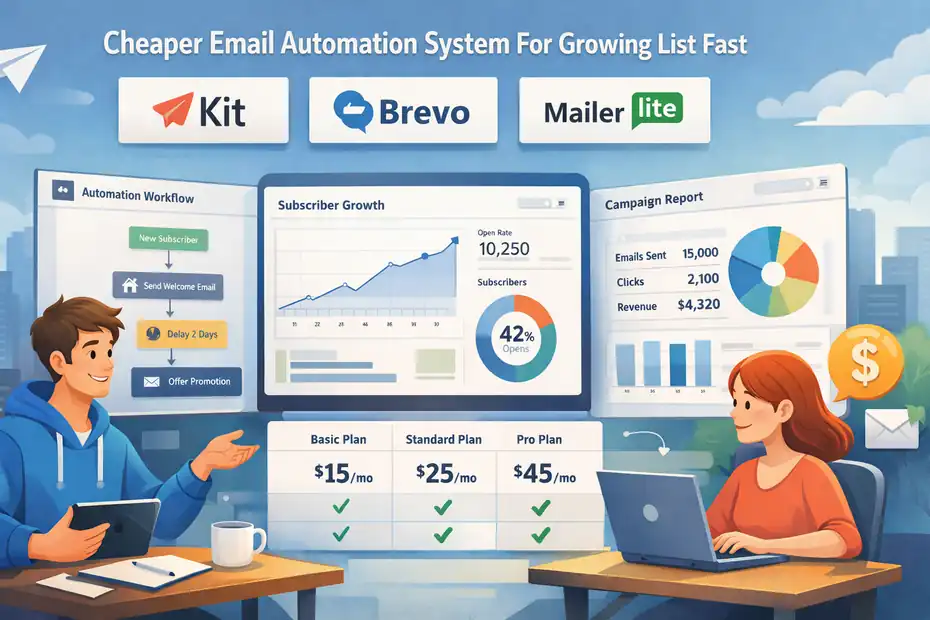
A cheaper email automation system for growing list is something almost every blogger, creator, or small business owner eventually searches for. At the beginning, most email platforms feel affordable. But once your list starts growing, the monthly bill can jump fast — sometimes from $15 to $200+ almost overnight.
I’ve seen this happen many times. Someone grows their list to 10,000 subscribers and suddenly realizes their email tool is eating a huge chunk of revenue. That’s why building a cheaper email automation system early matters. Not by sacrificing features, but by choosing tools and automation structures that scale without punishing your growth.
In this guide, I’ll walk you through exactly how to build a cheaper email automation system for growing list sizes — from choosing the right platform to setting up automation, segmentation, and scaling strategies that keep costs under control while your audience expands.
Understanding a Cheaper Email Automation System for Growing List Growth
Before choosing tools or building automation, it helps to understand why email platforms become expensive and what actually makes an email system affordable long term.
Most email tools charge based on subscriber count. The bigger your list becomes, the more you pay. But a cheaper system isn’t just about lower prices — it’s about efficient automation, smart segmentation, and platform pricing models that scale better.
Why Email Marketing Costs Increase as Your List Grows
Most email platforms use a subscriber-based pricing model. That means every email address on your list counts toward your monthly cost.
Here’s a simplified example many creators experience:
| Subscribers | Typical Monthly Cost |
|---|---|
| 1,000 | $10 – $30 |
| 5,000 | $50 – $100 |
| 10,000 | $120 – $250 |
| 25,000 | $300 – $600 |
The biggest mistake beginners make is assuming the starting price reflects long-term cost.
For example:
- A platform may cost $15/month initially
- But $250/month at 10k subscribers
From what I’ve seen, this is where many creators panic and try to migrate platforms after their list grows. Migration is stressful and sometimes risky.
A cheaper email automation system avoids this problem by planning for growth from day one.
What Makes an Email Automation System “Cheaper” Long Term
A cheaper system isn’t always the lowest monthly price. It’s the system that keeps costs predictable while your list grows.
There are several factors that determine long-term affordability:
Subscriber pricing structure: Some platforms charge aggressively for list growth while others scale gradually.
Automation availability: Some cheaper tools lock automation behind higher tiers.
Email sending limits: Certain tools charge extra when you send frequent campaigns.
Segmentation features: Good segmentation lets you send emails only to engaged subscribers, which keeps costs lower.
Built-in tools: Landing pages, forms, and automations reduce the need for extra software.
For example, platforms like Kit (formerly ConvertKit) and Brevo include automation and segmentation in relatively affordable tiers compared to older tools like Mailchimp.
In my experience, the real goal isn’t simply paying less. It’s creating an automation structure that keeps revenue higher than email costs.
How Email Automation Helps Grow Your List Faster
Automation is the engine that allows your email list to grow without constant manual work. Without automation, you’re basically sending individual campaigns and hoping people stick around.
A well-designed cheaper email automation system for growing list growth focuses on subscriber experience first.
The Role of Lead Magnets in Email List Growth
Lead magnets are still the fastest way to grow an email list in 2026.
A lead magnet is simply something valuable you offer in exchange for an email address.
Examples that convert well today:
- Free guides or checklists
- Templates or swipe files
- Short courses
- AI prompts
- Discount codes
- Resource libraries
Imagine you run a blog about freelancing.
Instead of asking visitors to “subscribe to a newsletter,” you offer: “Get my 10-client outreach email templates.”
Conversion rates often jump from 1–2% to 20–40% with a strong lead magnet.
Your email automation system then automatically:
- Delivers the lead magnet
- Sends a welcome sequence
- Nurtures the subscriber
- Introduces products or affiliate offers
This automation runs 24/7 without extra work.
Why Automated Sequences Reduce Email Marketing Costs
Automation sequences do more than save time — they also increase revenue per subscriber.
Here’s a simple example sequence many creators use:
- Email 1: Deliver the lead magnet
- Email 2: Share a personal story
- Email 3: Provide useful tips
- Email 4: Introduce a product or affiliate offer
- Email 5: Follow-up with value
If each subscriber generates even $1–$3, your email system quickly pays for itself.
According to Campaign Monitor, automated emails generate 320% more revenue than non-automated emails.
This is why a cheaper email automation system isn’t about removing automation. It’s about using automation strategically so the list becomes profitable as it grows.
Best Affordable Email Automation Platforms for Growing Lists
Not all email platforms scale well in price. Some start cheap but become extremely expensive once your list grows.
The platforms below are widely used by bloggers, creators, and small businesses that want powerful automation without massive pricing jumps.
Kit (Formerly ConvertKit)
Kit is one of the most popular platforms among bloggers and creators because it focuses on simplicity and automation.
What makes it attractive for growing lists:
- Visual automation builder
- Tag-based segmentation
- Built-in landing pages
- Creator-friendly integrations
- Easy affiliate marketing support
Pricing scales moderately compared to some competitors.
Example pricing (approximate):
| Subscribers | Monthly Price |
|---|---|
| 1,000 | ~$15 |
| 5,000 | ~$79 |
| 10,000 | ~$119 |
In my experience, Kit works best for:
- Bloggers
- Course creators
- Affiliate marketers
- Newsletter businesses
It’s not always the absolute cheapest, but its automation system often saves time and tools.
Brevo (Formerly Sendinblue)
Brevo is one of the most underrated platforms if your goal is a cheaper email automation system for growing list sizes.
Unlike most platforms, Brevo charges based on emails sent, not subscriber count.
That means:
You can have 20,000+ subscribers but still pay a relatively low price if you don’t send daily emails.
Brevo features include:
- Email automation
- CRM tools
- SMS marketing
- Landing pages
- Transactional email
Example pricing model:
| Plan | Monthly Price | Email Limit |
|---|---|---|
| Free | $0 | 300/day |
| Starter | ~$25 | 20k/month |
| Business | ~$65 | advanced automation |
For creators who send weekly emails, this pricing model can dramatically reduce costs.
MailerLite
MailerLite is another strong option for those building a cheaper email automation system.
It’s particularly attractive for beginners because the interface is extremely simple.
Key features include:
- Drag-and-drop automation builder
- Website builder
- Landing pages
- Email segmentation
- Subscriber tagging
Pricing example:
| Subscribers | Monthly Cost |
|---|---|
| 1,000 | ~$10 |
| 5,000 | ~$39 |
| 10,000 | ~$73 |
Many bloggers choose MailerLite because it offers excellent value without complicated features.
Step-by-Step Setup for a Cheaper Email Automation System
Let me walk you through the practical setup process. The goal is building a system that grows your list automatically without forcing you into expensive tools later.
Step 1: Choose the Right Email Platform for Long-Term Growth
Start by choosing a platform based on how you plan to use email.
Ask yourself three questions:
- How often will I send emails?
- Do I need advanced automation?
- How fast do I expect my list to grow?
General recommendations:
- Choose Brevo if you want the lowest cost with large lists.
- Choose MailerLite if you want simple automation.
- Choose Kit if you want powerful creator automation.
The key is choosing a tool that won’t punish you financially when your list grows.
Step 2: Create a High-Converting Lead Magnet
Your email system only works if people actually subscribe.
A good lead magnet should:
- Solve one specific problem
- Deliver fast value
- Be easy to consume
Examples that work well:
- “50 Blog Post Ideas for Beginners”
- “Freelance Client Pitch Templates”
- “30-Day Instagram Content Planner”
Conversion rates often improve when the lead magnet is very specific rather than broad.
Step 3: Build Your Automated Welcome Sequence
Once someone subscribes, your automation should start immediately.
Here’s a simple sequence structure that works well.
- Email 1: Deliver the lead magnet and thank them for joining.
- Email 2: Share your story or experience.
- Email 3: Provide helpful tips related to your niche.
- Email 4: Introduce a product, affiliate tool, or resource.
- Email 5: Encourage engagement or feedback.
This automation builds trust while also generating revenue opportunities.
Common Mistakes That Make Email Automation Expensive
Many people accidentally create expensive email systems without realizing it.
These mistakes often increase monthly costs while reducing engagement.
Keeping Too Many Inactive Subscribers
Inactive subscribers still count toward your pricing tier.
For example: A list of 20,000 subscribers might only have 5,000 active readers. Yet you still pay for all 20,000. Cleaning your list every few months can dramatically reduce costs.
Many platforms allow automation like: “If subscriber hasn’t opened email in 90 days → move to inactive segment.”
Using Multiple Tools Instead of One Platform
Another common mistake is stacking tools unnecessarily.
For example:
- One tool for landing pages
- Another for forms
- Another for automation
- Another for email sending
Many modern platforms already include these features.
Using fewer tools keeps your system simpler and cheaper.
Advanced Strategies to Keep Email Automation Costs Low
Once your list grows beyond 5,000 or 10,000 subscribers, cost management becomes even more important.
These strategies help maintain a cheaper email automation system for growing list sizes.
Segmenting Your List to Reduce Email Volume
Segmentation means sending emails only to people who are interested in specific topics.
Example segments:
- Buyers
- Leads
- Webinar attendees
- Affiliate prospects
- Active readers
Instead of sending 100k emails per campaign, segmentation might reduce sends to 30k highly engaged subscribers.
This improves:
- open rates
- click rates
- deliverability
And in some platforms, it also reduces cost.
Monetizing Your List Early
The best way to make email affordable is simple:
Make your list profitable.
Revenue sources may include:
- Affiliate marketing
- Digital products
- Courses
- Coaching
- Sponsorships
Even small revenue per subscriber changes everything.
For example:
10,000 subscribers generating $0.50 each per month = $5,000 revenue
Suddenly a $100–$200 email platform cost becomes insignificant.
Final Thoughts on Building a Cheaper Email Automation System for Growing Lists
Building a cheaper email automation system for growing list sizes isn’t about choosing the lowest price tool. It’s about designing a system that grows with you instead of becoming expensive overnight.
In most cases, the winning strategy looks like this:
- Choose a scalable email platform
- Build one strong lead magnet
- Automate your welcome sequence
- Segment subscribers early
- Monetize the list as it grows
From what I’ve seen, creators who set up their email automation properly rarely worry about platform pricing later. Their list grows, revenue grows, and the system keeps working in the background.
And honestly, that’s the real goal of email marketing — building an asset that works for you long after the initial setup.
FAQ
What is a cheaper email automation system for growing list sizes?
A cheaper email automation system for growing list growth is an email marketing setup that keeps costs low as your subscriber count increases. It combines affordable email platforms, automated sequences, segmentation, and smart list management so businesses can scale email marketing without monthly costs rising too quickly.
Which email platforms are best for a cheaper email automation system?
Some of the best platforms for building a cheaper email automation system include Kit, Brevo, and MailerLite. These platforms offer automation, segmentation, and landing pages at relatively lower costs compared to many traditional email marketing tools, making them suitable for bloggers, creators, and small businesses.
How does email automation help grow an email list faster?
Email automation helps grow an email list faster by automatically delivering lead magnets, welcome sequences, and follow-up emails to new subscribers. This improves engagement, builds trust quickly, and encourages subscribers to stay active, which increases the chances of list growth and long-term conversions.
How can I keep email marketing costs low as my list grows?
You can keep email marketing costs low by removing inactive subscribers, using segmentation to send fewer but more targeted emails, and choosing platforms with scalable pricing. Many creators also focus on monetizing their email list early so the revenue generated easily covers the cost of automation tools.
Is email automation worth it for small blogs or businesses?
Yes, email automation is highly valuable for small blogs and businesses because it allows you to nurture subscribers automatically while focusing on content or product creation. Even a small automated sequence can generate consistent traffic, affiliate commissions, or product sales over time.

Juxhin B is a digital marketing researcher and founder of JAK Digital Hub, specializing in email marketing software, marketing automation platforms, and digital growth tools. His work focuses on software testing, platform comparisons, and real-world performance analysis to help businesses choose the right marketing technology.
Related posts:
 Email Automation Tools Cost for 20k Subscribers—Price Breakdown
 Email Automation Systems That Drive Revenue
 Email Automation Tools for 100k Subscribers: Best Value Picks
 Email Automation Software With Better Deliverability Ranked
 Best Email Tools to Turn Subscribers Into Sales
 Best Email Marketing Tools (Tested & Compared)